Best Fabric for Hoodies and Sweatshirts
How to choose hoodie and sweatshirt fabric by knit type, weight (gsm), fiber, and stretch, plus the ribbing and hood lining you will need.
Most “best fabric for hoodies” articles are written for shoppers comparing store-bought sweatshirts. This one is for people making them. When you buy hoodie fabric by the yard, you choose four things: the knit, the weight, the fiber, and the stretch. You also need a second fabric for the cuffs and hem band. Get those right and almost any hoodie pattern will turn out well.
The quick recommendations
- Best all-round hoodie fabric: midweight cotton French terry, around 300 gsm. It’s comfortable most of the year, easy to sew, and drapes nicely.
- Best for warmth: cotton or cotton-rich sweatshirt fleece, around 350–400 gsm.
- Best for a heavyweight, boxy streetwear hoodie: heavy French terry or fleece, 450 gsm and up.
- Best for a fitted or athletic hoodie: a French terry with spandex for extra stretch and recovery.
- For cuffs and the hem band, always: rib knit.
The rest of this guide explains why, so you can make the call for your own pattern.
1. Pick the knit: French terry or fleece
Nearly all hoodie and sweatshirt fabric is one of two knits:
- French terry has a smooth face and small loops on the back. It’s breathable and drapes, and it’s the better choice for year-round wear.
- Sweatshirt fleece is the same kind of knit with the loops brushed into a soft pile. It’s warmer and cozier.
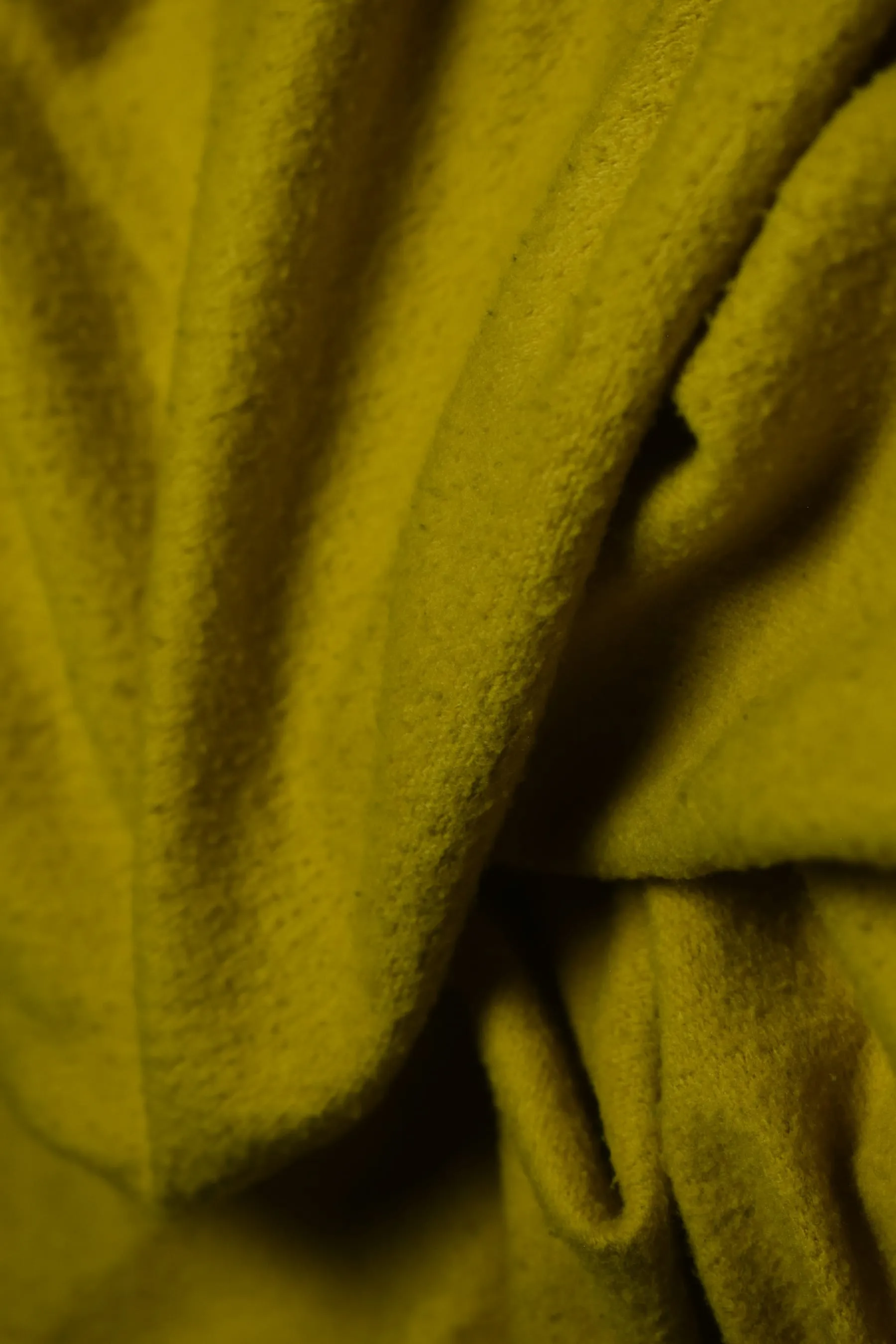

We compare them in detail in French terry vs fleece: which for your hoodie?. In short, choose terry for versatility and fleece for warmth.
Wovens like cotton twill or canvas are generally not used for pullover hoodies. They have no stretch, so a pullover won’t go over your head comfortably unless the pattern is drafted for a woven. Stick with a knit unless your pattern says otherwise.
2. Pick the weight (gsm)
Weight has the biggest effect on how your hoodie looks and hangs. Fabric weight is usually given in gsm (grams per square meter). Sometimes it’s given in ounces, which is confusing, because ounces can mean two different things:
- oz per square yard, a fixed area, or
- oz per linear yard, one yard off the bolt at its full width. This number depends on how wide the fabric is.
Here’s how far apart the two can be. 400 gsm works out to about 11.8 oz per square yard. At 60 inches wide, one linear yard is 1⅔ square yards, so the same fabric weighs about 19.7 oz per linear yard. Both numbers describe one fabric; they just measure different areas. Compare gsm to gsm whenever you can.
Here’s a rough guide to what different weights feel like in a hoodie:
| Weight | oz per sq yd (approx.) | How it feels in a hoodie |
|---|---|---|
| 250–300 gsm | 7.4–8.8 | Light to midweight. Drapey, good for layering and warm climates. |
| 300–350 gsm | 8.8–10.3 | Classic midweight. A good default for most patterns. |
| 350–450 gsm | 10.3–13.3 | Heavy. Warm, holds its shape, with a substantial hood. |
| 450 gsm + | 13.3 + | Very heavy. Boxy streetwear look, stiff at first, thick seams. |
The oz column is a direct unit conversion (1 oz/sq yd ≈ 33.9 gsm), not a measurement of any specific fabric.
Pattern designers often give a recommended weight. Helen’s Closet, for example, recommends roughly 9–14 oz (300–475 gsm) for its Solstice Hoodie (pattern listing). Check your pattern first. If it doesn’t say, 300–400 gsm is a safe range for a first hoodie.
Heavier isn’t automatically better. Very heavy fabric means bulky seams where the hood, neckline, and pocket meet, and it can be hard on a home machine. If you’re new to sewing knits, start midweight.
Weight has the biggest effect on how your hoodie looks and hangs.

3. Pick the fiber
| Fiber | Good for | Watch out for |
|---|---|---|
| 100% cotton | Breathable, soft, classic sweatshirt feel | Shrinks in the first wash, so prewash. Can stretch out at cuffs over time. |
| Cotton-poly blends (e.g., 50/50) | Less shrinking and wrinkling, often holds color well | Less breathable, and some blends pill |
| Cotton + spandex | Stretch and recovery for fitted styles. Elbows don’t bag out. | Can feel warmer and less “classic sweatshirt” |
| Rayon/modal blends | Drape and softness | Can be less stable to sew. Follow care instructions closely. |
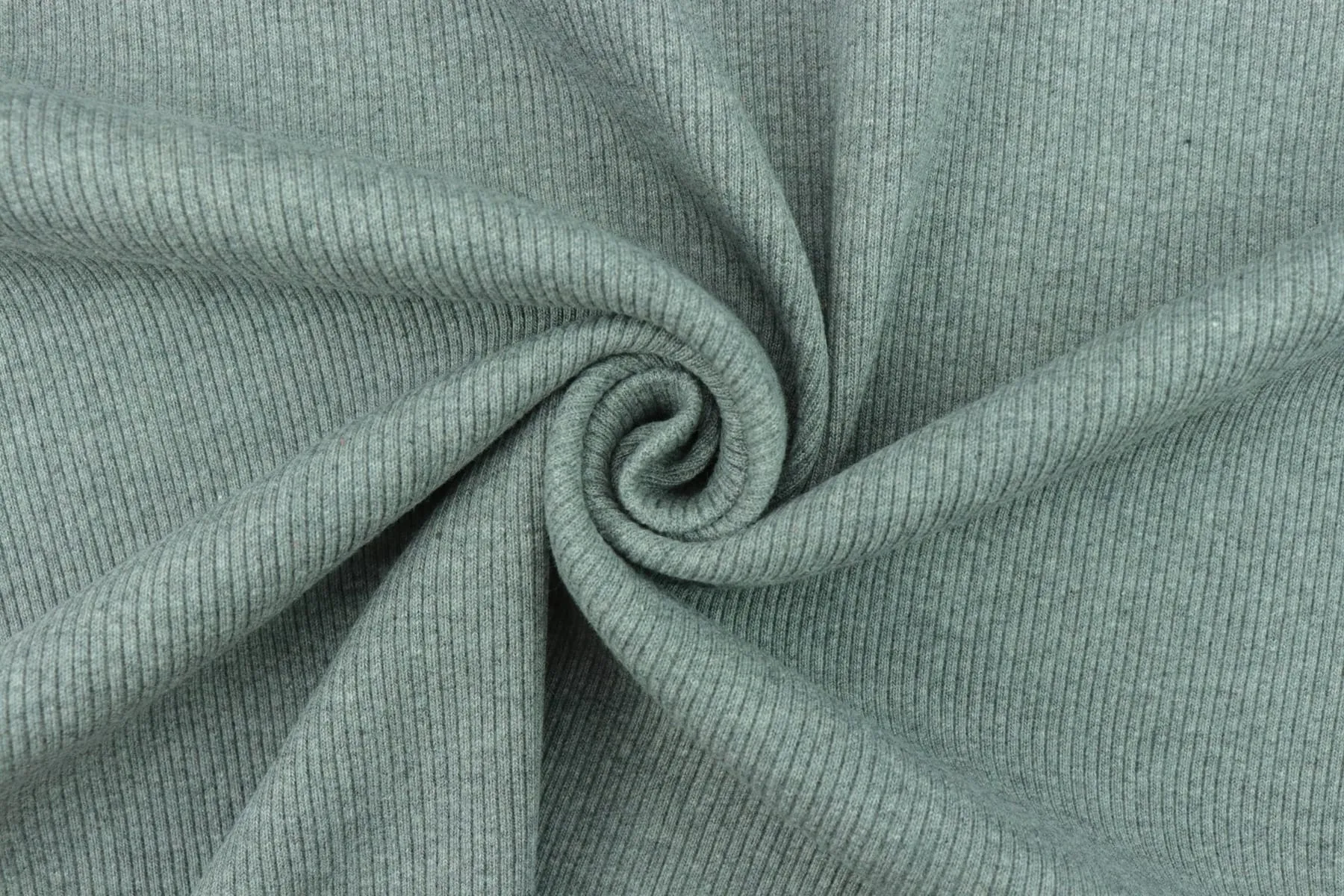
No fiber is best for everyone. If you want the classic hoodie look and don’t mind prewashing, choose cotton. If you want easy care, a cotton-poly blend makes sense.
4. Check the stretch
Hoodie patterns usually state a minimum stretch for the main fabric, and the numbers vary from pattern to pattern. Some real examples:
- The Know Me ME2023 hoodie instructions include a stretch gauge requiring folded fabric to stretch 35% (instruction PDF).
- Sinclair Patterns’ Uno hoodie calls for 30–50% horizontal and 10–20% or more vertical stretch (pattern page).
- Helen’s Closet’s Solstice zip-up asks for minimal stretch, 0–10%, because it has a zipper front (pattern listing).
To test stretch, fold the fabric along the crosswise grain, hold 4 inches between your fingers, and gently stretch it against a ruler. If 4 inches reaches 5 inches, that’s 25% stretch. Also watch whether it springs back. Good recovery is what keeps cuffs and elbows from bagging.
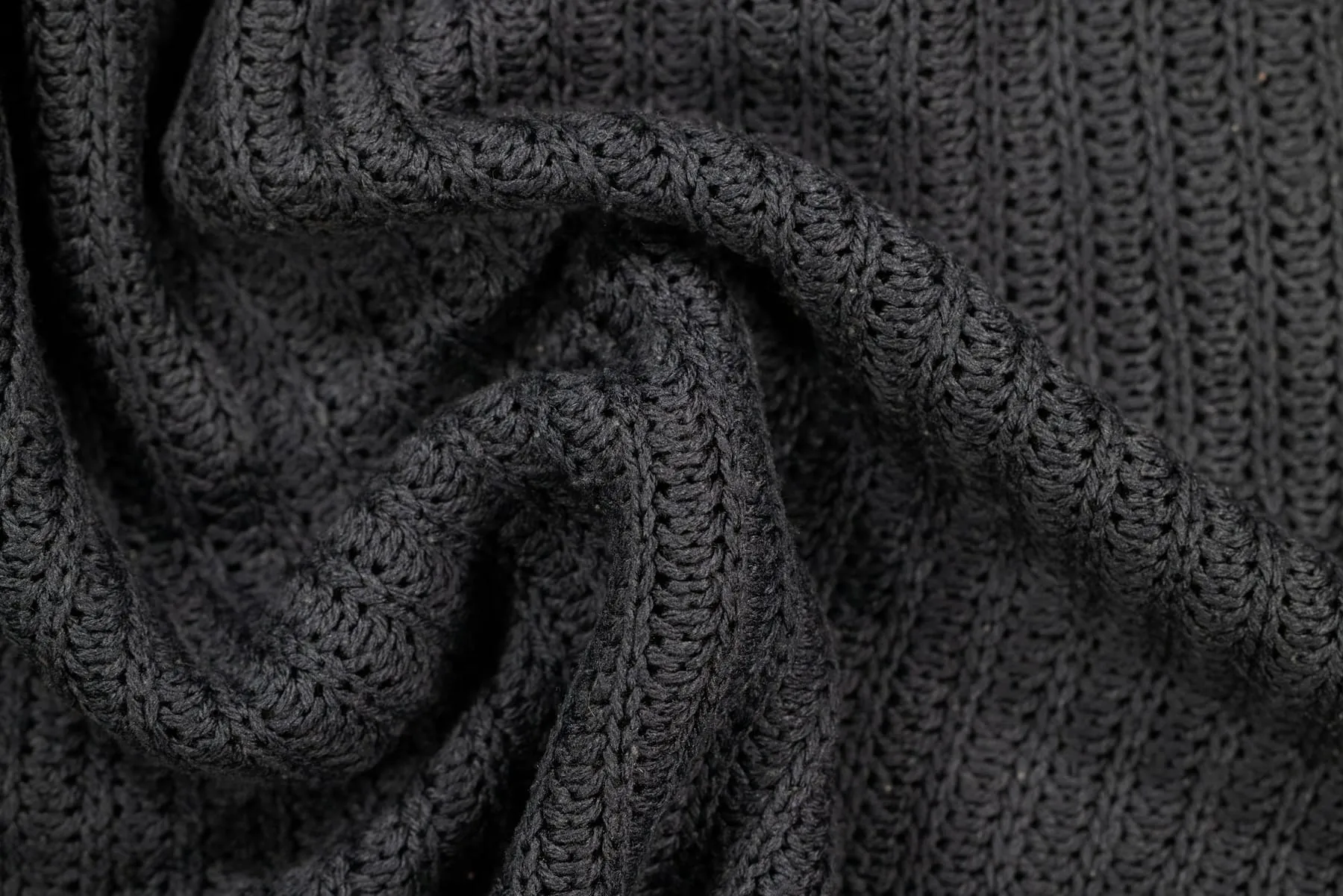
Standard cotton French terry and fleece have modest mechanical stretch from the knit itself. If your pattern needs a lot of stretch, look for a fabric with spandex.
5. Don’t forget the ribbing
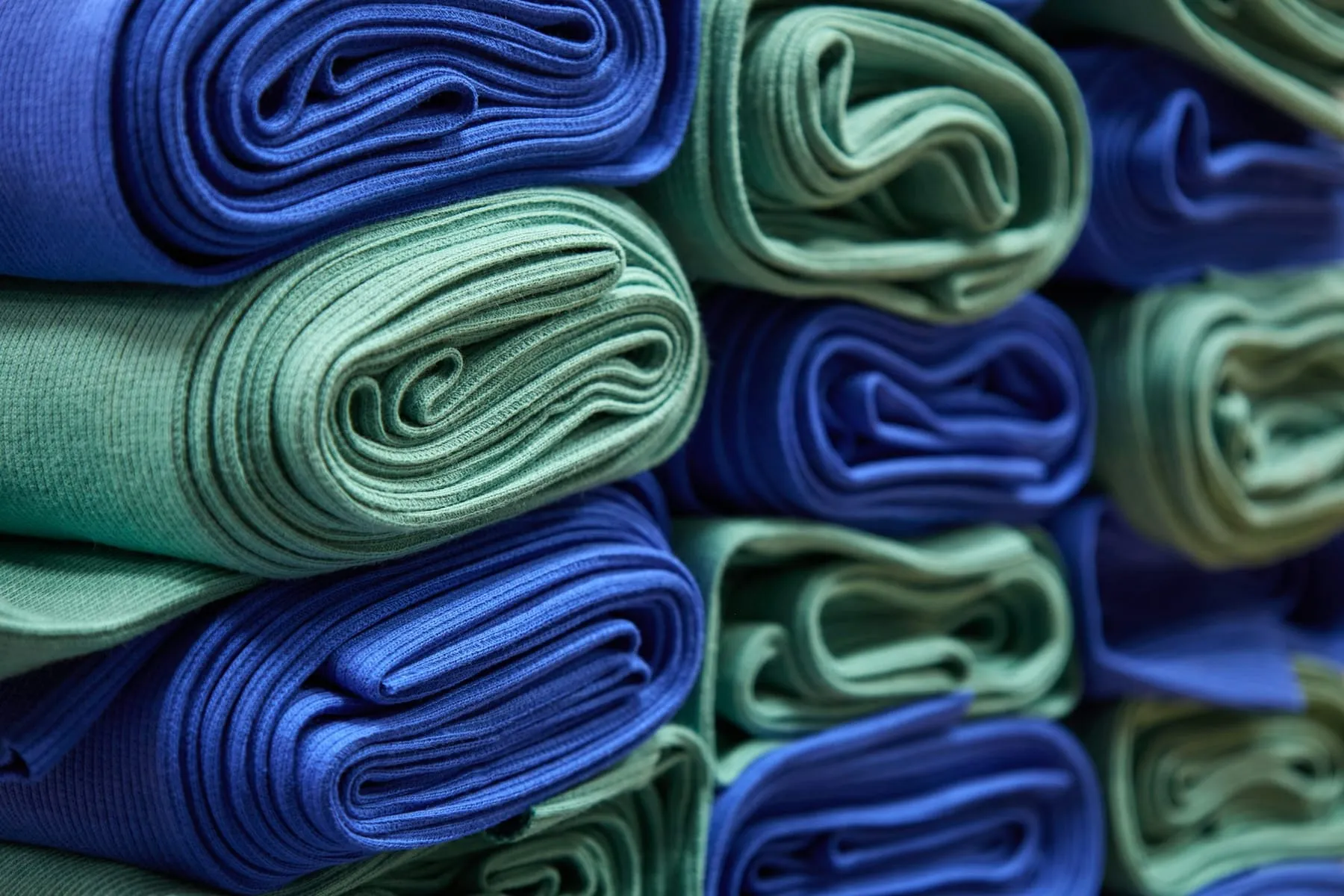
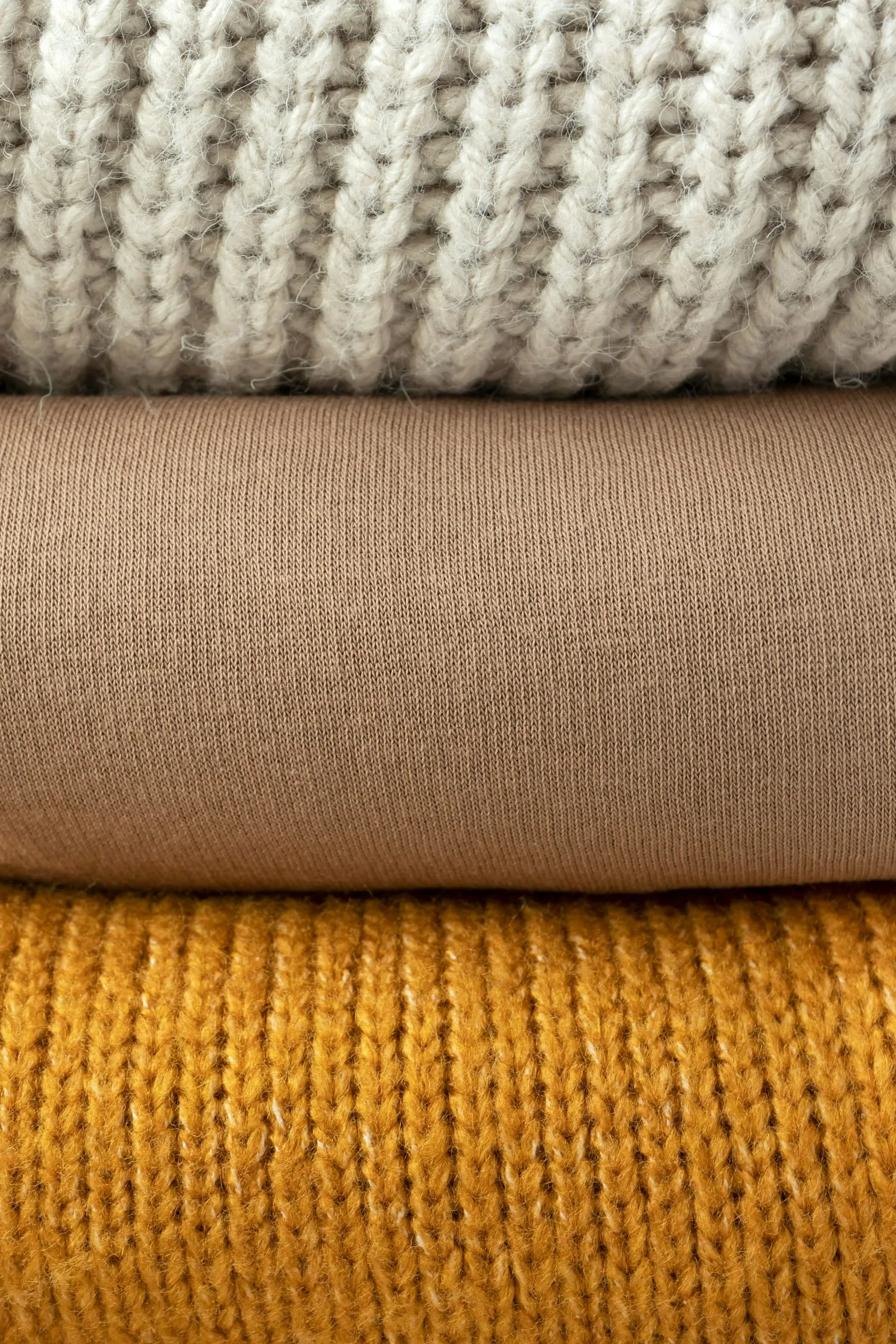
Cuffs, the hem band, and sometimes the neckline need rib knit: a knit with vertical ribs that stretches a lot and snaps back. The main fabric usually doesn’t recover well enough to keep a cuff snug.
Tips for ribbing:
- Match the weight. Light ribbing on a heavy body can look flimsy. Some fabric listings sell ribbing made to match the main fabric.
- Expect the color to differ a little. Even “matching” rib can come from a different dye lot. If the color needs to match exactly, order a swatch.
- Prewash it with the body fabric so both shrink the same amount.
- How much? Many patterns call for well under a yard. Helen’s Closet lists 0.4–0.5 yd of ribbing for the Solstice (source). Check your own pattern.
6. Decide on a hood lining
A single-layer hood shows the back of the fabric, which is the loops or the fuzz. That looks fine, but many patterns include a lined hood for a cleaner finish. Common choices:
- The same fabric for a thick, structured hood
- Cotton jersey for a lighter, smooth lining that’s easy to sew
- Sherpa for a warm, cozy hood on a winter hoodie
What to look for, by hoodie type
| Hoodie | Fabric to search for | Weight | Notes |
|---|---|---|---|
| Everyday, year-round | Cotton French terry | ~300 gsm | Easiest to sew; drapes well |
| Warm winter | Cotton or cotton-rich sweatshirt fleece | ~350–400 gsm | Look for a listing with matching rib |
| Heavyweight streetwear | Heavy French terry or fleece | 450 gsm + | Use a heavier needle; expect bulky seams |
| Fitted or athletic | French terry with spandex | Mid | Check the stretch % against your pattern |
Where to buy hoodie fabric
You won’t find all of this in one shop, and listings vary a lot in how much they tell you. Before you buy, look for gsm (not just ounces), width, fiber content, and stretch. If a listing leaves one out, ask the shop or order a swatch.
A few places to start:
- Big-catalog shops such as Fabric Mart Fabrics (its knit section listed 740 items when we checked on Oct 31, 2026) and Mood Fabrics give you the widest choice of weights and colors.
- Independent shops such as Stonemountain & Daughter, which has a dedicated knits and jerseys section, are worth it for curated picks and helpful product notes.
- Etsy has many small fabric sellers. Shipping, returns, and how well listings are described vary from shop to shop, so read each one.
Many shops treat cut fabric as final sale, so check the return policy before ordering several yards. We compare shipping and returns at ten stores in the best online fabric stores.
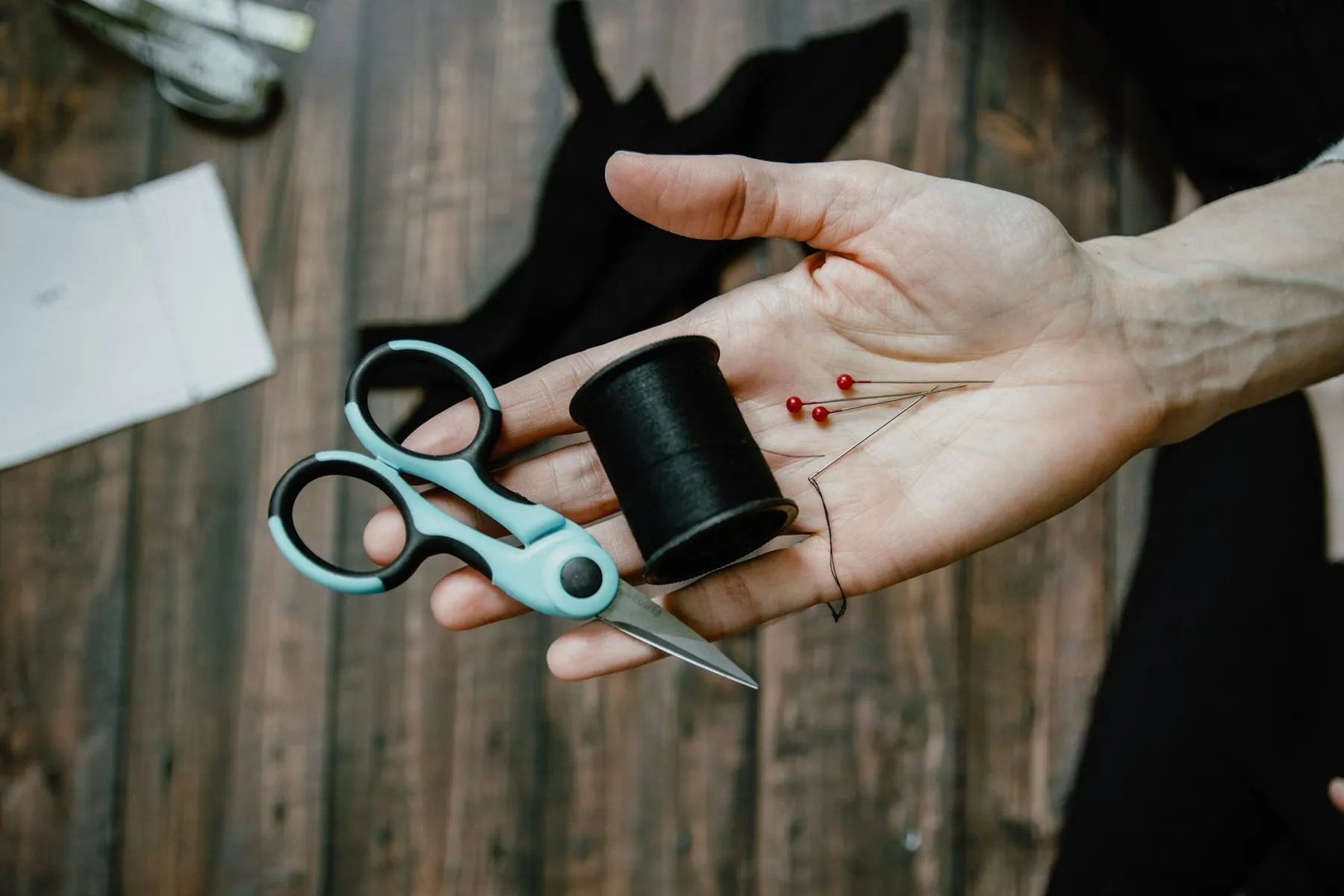
Sewing it on a regular machine? Our guide to sewing knits without a serger covers needles, stitches and hems.
Common questions
What is the best material for a hoodie?
For most home-sewn hoodies, cotton French terry or cotton sweatshirt fleece, in roughly the 300–400 gsm range. Choose terry for year-round wear and fleece for warmth.
What gsm is best for a hoodie?
It depends on the look you want. Around 300 gsm is a comfortable midweight. 400 gsm and up gives a heavy, structured hoodie. Always check your pattern’s recommendation.
Can I make a hoodie out of jersey?
Lightweight jersey makes a thin, drapey “summer hoodie.” It works, but it won’t have the body or warmth of terry or fleece. Jersey is great as a hood lining, though.
How much fabric do I need?
Usually around 2–2.5 yards of 60-inch fabric for an adult hoodie, depending on your size and pattern. Here’s the full breakdown with sources: how much fabric you need for a hoodie.