Free Lined Tote Bag Pattern: Boxed Base, Inside Pocket, All Rectangles
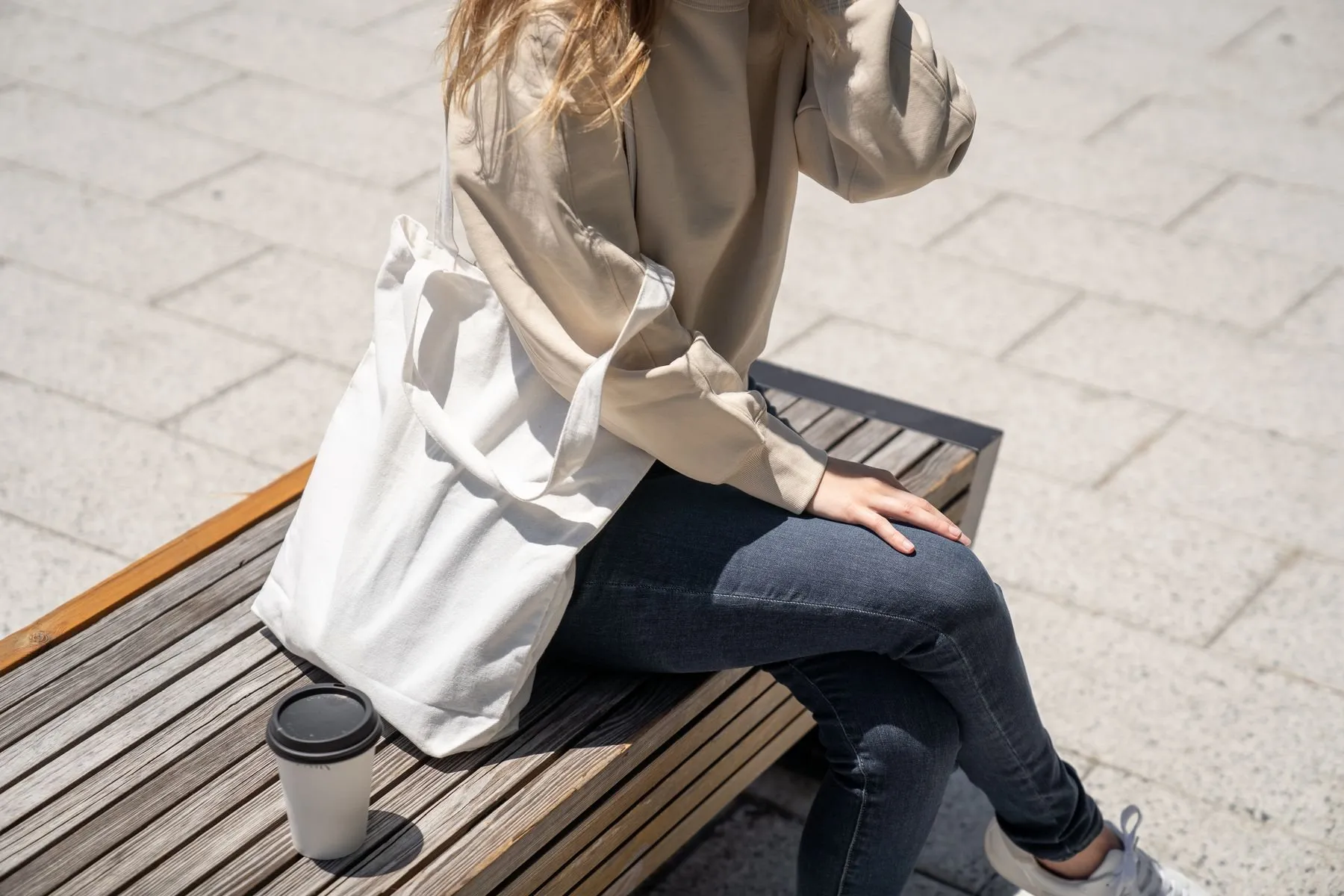
A free lined tote bag pattern cut entirely from rectangles: boxed base, sturdy straps and an inside pocket. Cutting chart PDF, full-size corner template and steps.
Because every piece is a rectangle, there’s nothing to trace or tape together. The PDF gives you a cutting chart with inches and centimetres, cutting layouts for both fabrics, and a full-size boxed-corner template: the one shape that’s easy to get wrong when you measure by hand.
What size is the finished tote?
| Measurement | Inches | Centimetres |
|---|---|---|
| Width at the top | 14” | 36 cm |
| Height | 15” | 38 cm |
| Boxed base | 10” × 4” | 25 × 10 cm |
| Strap drop | about 10” | about 25 cm |
| Inside pocket | 7” × 6” | 18 × 15 cm |
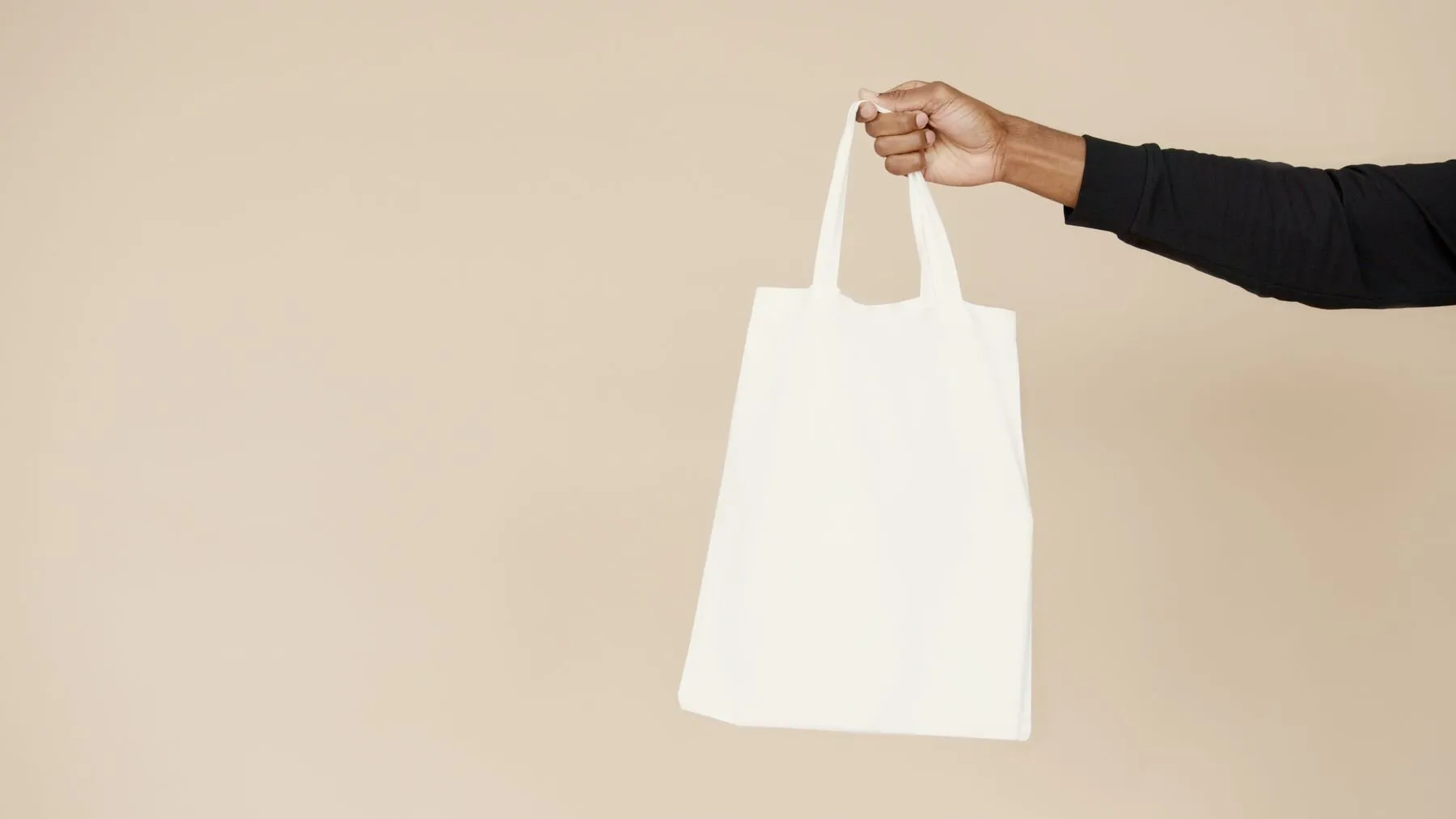
That’s big enough for a laptop, a library haul or a project bag full of fabric, and the straps go over the shoulder.
What fabric and supplies do you need?
| Fabric | 44–45” wide | 58–60” wide | Good choices |
|---|---|---|---|
| Outer + straps | ¾ yd (70 cm) | ¾ yd (70 cm) | Canvas, duck, denim, twill |
| Lining + pocket | ⅝ yd (60 cm) | ⅝ yd (60 cm) | Quilting cotton, poplin |
| Interfacing (optional) | 1 yd (1 m) of 20”-wide | Medium fusible, for light outers |
- All-purpose polyester thread
- Needle size 90/14, or a 100/16 denim needle for heavy canvas (our free needle and thread guide has the full chart)
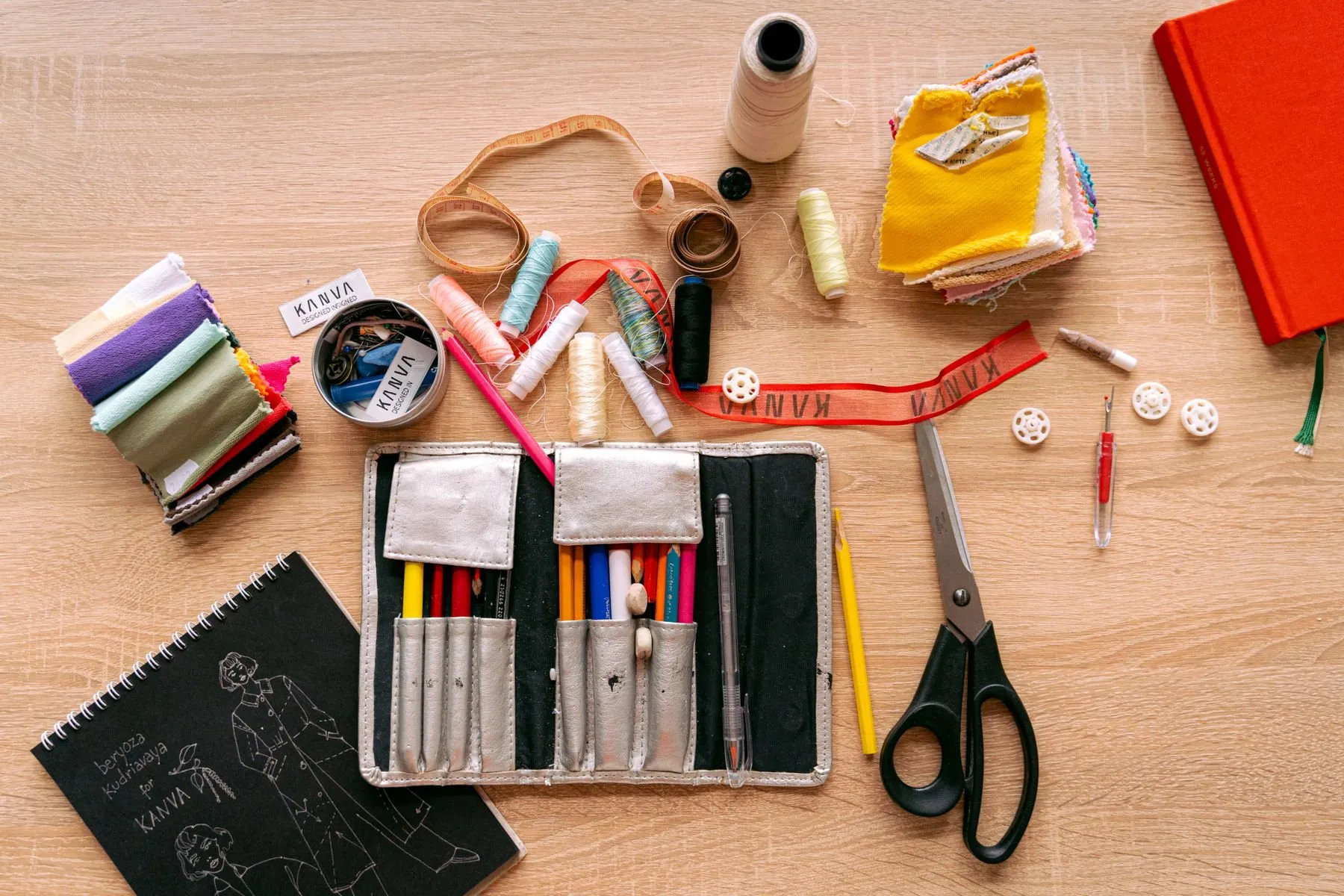
- Pins or clips, a ruler or quilting ruler, chalk or a fabric marker, an iron
Prewash cotton outers and linings together before cutting, so they shrink before they’re sewn. Our guide to whether you should prewash fabric explains why.
How do you cut the pieces?
Cut everything with the straight grain running up the bag, parallel to the selvage. The ½” (1.3 cm) seam allowance is already included.
| Piece | Cut from | Cut | Size |
|---|---|---|---|
| A: Outer bag | Outer fabric | 2 | 15” × 18” (38 × 46 cm) |
| B: Lining | Lining fabric | 2 | 15” × 18” (38 × 46 cm) |
| C: Strap | Outer fabric | 2 | 4” × 24” (10 × 61 cm) |
| D: Inside pocket | Lining fabric | 1 | 8” × 14” (20 × 36 cm) |
| E: Interfacing (optional) | Medium fusible | 2 | 15” × 18” (38 × 46 cm) |
Then print page 3 at 100% / “Actual size”, check the test square, and use the corner template to cut a 2” square from both bottom corners of every A and B piece.
How to sew a lined tote bag, step by step
1. Make the straps
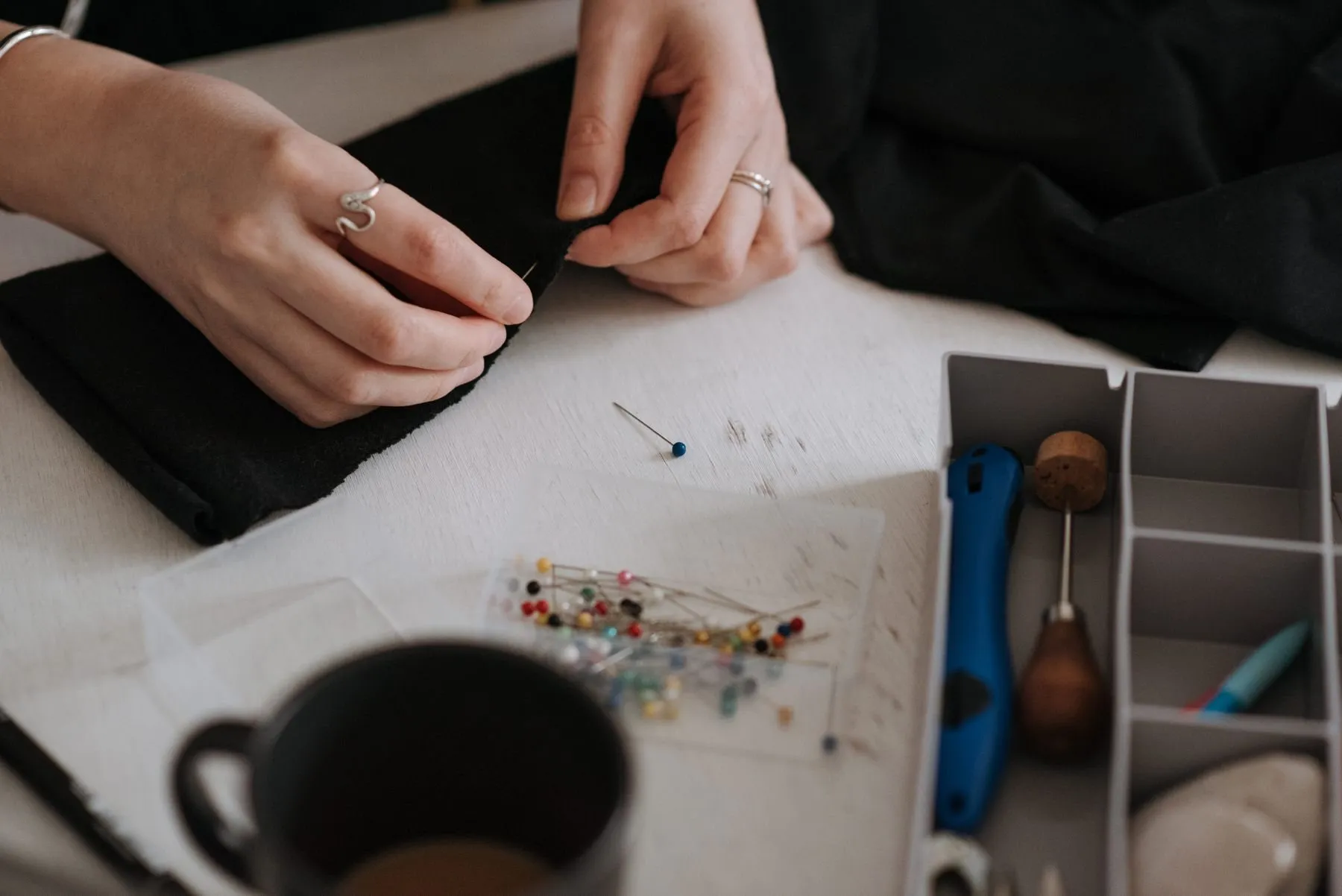
Press each strap C in half lengthwise and open it out. Fold both long edges in to the centre crease, then fold in half again: a 1”-wide strap, four layers thick. Topstitch ⅛” from both long edges.
2. Make the pocket
Fold D in half, right sides together, to 8” × 7”. Sew around the three open sides, leaving a 3” gap for turning. Clip the corners, turn it right side out and press. Stitch it to one lining piece, 3” below the top edge, along the sides and bottom; that closes the gap too.
3. Sew the outer bag
If your outer fabric is light, fuse the interfacing to the A pieces first. Place the two A pieces right sides together and sew down both sides and across the bottom. Leave the cut-out corners open, and press the seams open.
4. Box the corners
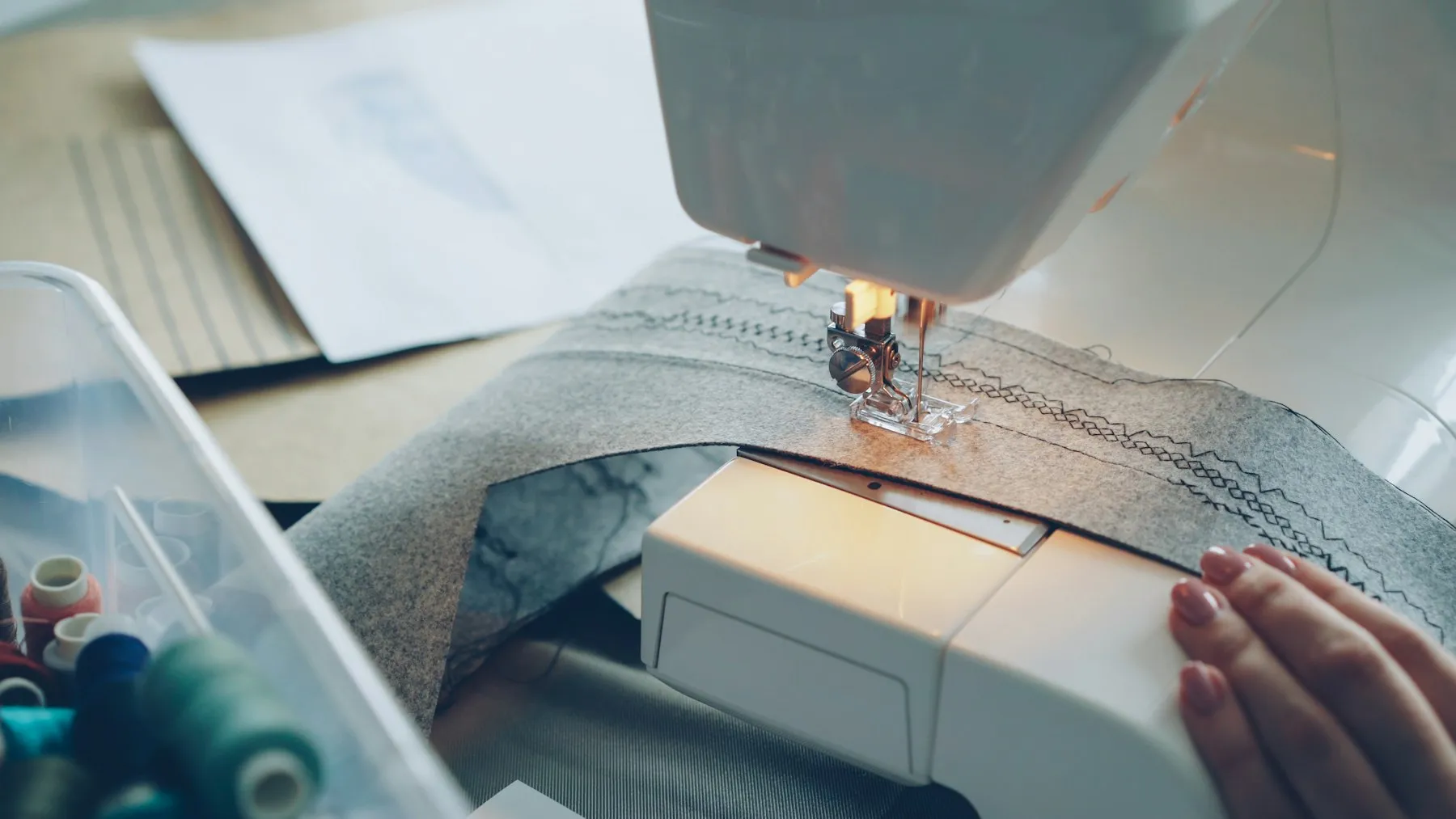
Pull each open corner apart so the side seam sits exactly on top of the bottom seam, forming a straight raw edge. Pin through the matched seams and stitch across, ½” from the edge. Backstitch at both ends. Repeat steps 3 and 4 for the lining, but leave a 5” gap in the lining’s bottom seam for turning.
5. Attach the straps
Turn the outer bag right side out. Pin each strap’s ends to the top edge, 3½” in from each side seam, with the strap looping down over the bag. Make sure it isn’t twisted. Baste ¼” from the edge.
6. Join and turn
Slide the outer bag (right side out) inside the lining (wrong side out), so they’re right sides together. Match the top edges and side seams, and sew around the top. Pull the whole bag out through the gap in the lining, then edgestitch the gap closed.
7. Finish
Push the lining down inside the bag and roll the top seam so it sits right on the edge. Press, then topstitch all around ¼” from the top, catching the straps for extra strength.
Every piece is a rectangle and every seam is straight. If you can sew a straight line, you can make this bag.
Want a quicker bag? Our free drawstring bag pattern is one rectangle and two cords. Ready for knits? Our free beanie sewing pattern is the next step up, and all our patterns live on the free sewing patterns page.
How do you change the size?
- Wider or taller: add the same amount to the width or height of A, B and E. The corner squares stay 2”.
- Longer straps: cut C 30” for a crossbody-length drop, about 13”.
- No lining: cut only A and finish the seams with a zigzag (our seam finish cheat sheet shows options), then fold the top under twice.
Common questions
How much fabric do you need for a lined tote bag?
For this 14 × 15 inch tote with a 4-inch base, you need ¾ yard of 44-inch outer fabric for the bag and straps, and ⅝ yard of lining for the lining and pocket. For 58–60 inch fabric, still buy ¾ yard of outer fabric: the 24-inch straps run parallel to the selvage, and ⅝ yard is only 22½ inches long. The lining and pocket need ⅝ yard.
What size square do you cut for boxed corners?
Cut a square half the depth you want the base to be. For a 4-inch boxed base, cut 2-inch squares from each bottom corner, then sew with the same seam allowance as the side and bottom seams.
What is the best fabric for a tote bag?
Canvas, cotton duck, denim and twill make a sturdy outer that holds its shape. Quilting cotton or poplin works well for the lining. Lighter outers need a medium fusible interfacing.
What needle should I use for canvas?
A size 90/14 universal needle handles most canvas and denim. For heavy duck or several layers at the strap seams, use a 100/16 denim needle and sew slowly.
Can I sell tote bags made from this pattern?
Yes, small-batch selling of bags you make is fine. Please don’t resell or share the PDF itself. Link to this page instead.
Sources
- Sew4Home: How to box corners, two methods with formulas (cut-out corner squares at half the finished depth, ½” seam allowance)
- Janome: Box corner formulas (cutout = depth ÷ 2)
- Pattern drafting, cutting layouts and the PDFs are by Sew by the Yard.
Free printable · The newsletter
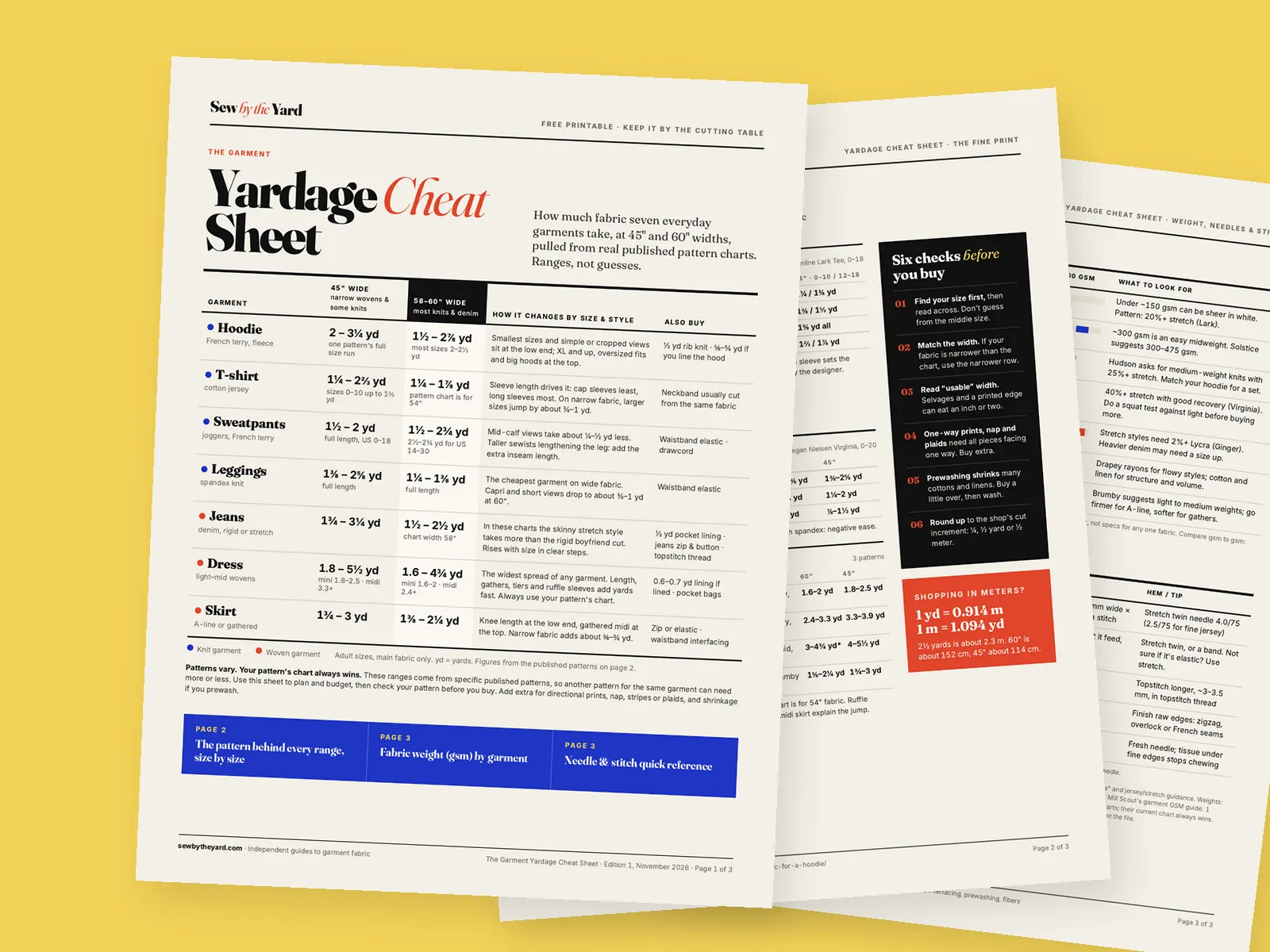
Never guess yardage again.
Join the Sew by the Yard newsletter and get The Garment Yardage Cheat Sheet: fabric amounts for seven garments at 45" and 60", a fabric-weight guide and a needle chart, on three printable pages.