How to Sew Denim on a Home Sewing Machine: Needles, Thread, Bulk and Topstitching
Sew denim on a home machine: a 90/14–100/16 jeans needle, topstitching thread on top only, a 3–4 mm stitch, hammered seams and a hump jumper.
You don’t need an industrial machine to sew jeans, a denim jacket or a canvas-weight tote. A regular home machine handles denim fine once you change four things: the needle, the thread, the stitch settings, and how you deal with bulk at the thick spots. Almost every skipped stitch, broken needle or bird’s nest on denim traces back to one of those. Here’s what to change and why.
Can a regular sewing machine sew denim?
Yes. Two layers of light or medium denim sew on almost any working home machine. The trouble spots are the places where seams cross and fold over each other, such as the back yoke meeting the center back seam, flat-felled inseams, belt loops on the waistband and folded hems. Those can stack up to six or more layers. The tips below are mostly about getting through those spots without skipped stitches or a jammed needle.
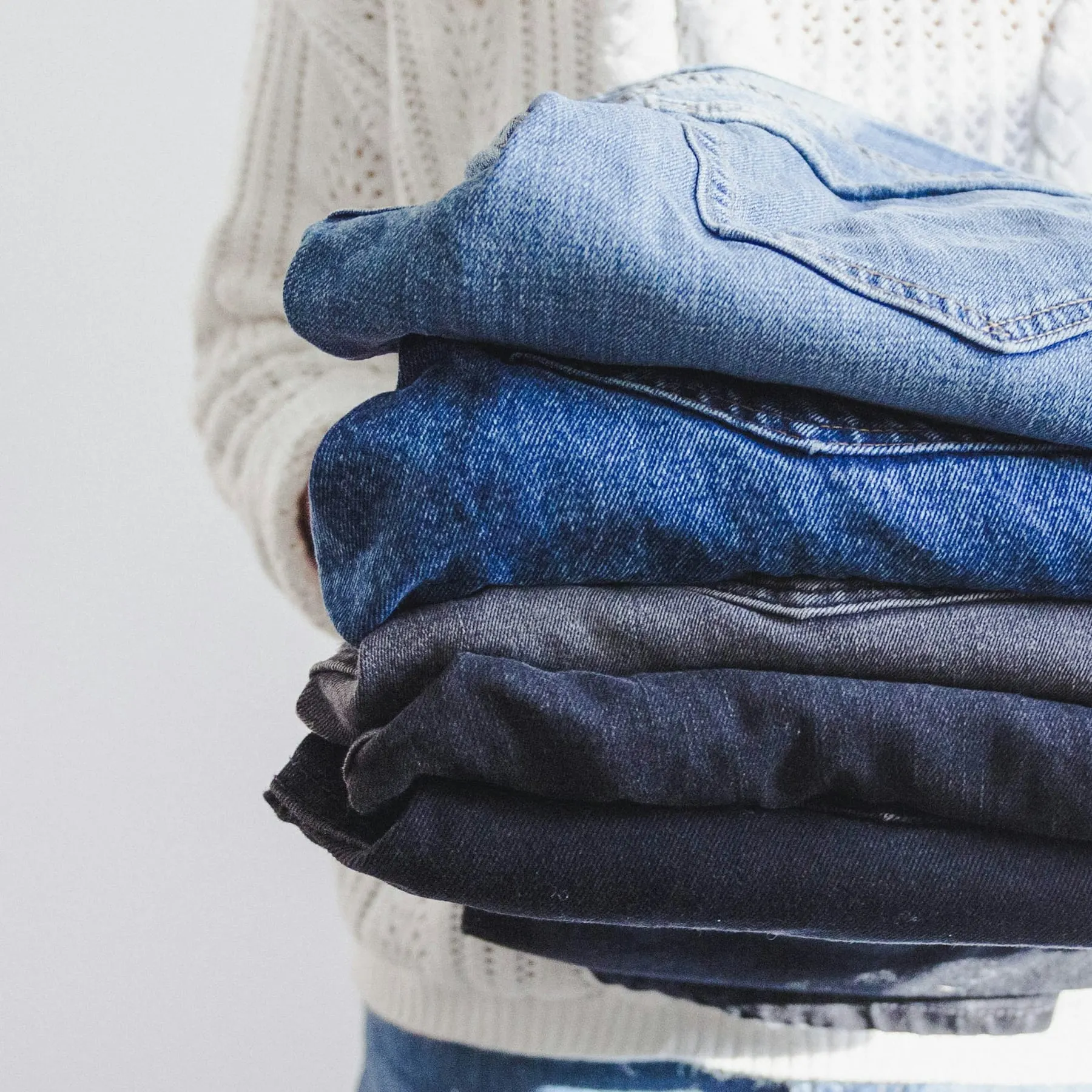
If you haven’t bought fabric yet, a lighter denim is easier to sew. Our best fabric for jeans guide explains denim weights in ounces and which ones suit which jeans styles.
Step 1: Put in a fresh jeans needle
Needle maker Schmetz says a universal needle in size 90 to 110 gives good results on jeans, but recommends its Jeans needle for the best results, because its reinforced blade penetrates multiple layers without breaking as easily (Schmetz: sewing jeans). Seamwork’s denim guide suggests 90/14 for light and medium denim and 100/16 for heavyweight denim, and says to start with a fresh needle (Seamwork: A guide to sewing denim).
| Denim / job | Needle to try first | Notes |
|---|---|---|
| Light or stretch denim, construction seams | Jeans 90/14 | Start here for most skinny and stretch jeans |
| Heavy or rigid denim, thick crossings | Jeans 100/16 | Size up only if 90/14 skips or bends |
| Very thick spots (belt loops, heavy canvas) | Jeans 110/18 | Schmetz’s range for belt loops runs 90 to 110 |
| Topstitching with heavy thread | Topstitch needle, 90/14 or 100/16 | Larger eye so the thick thread doesn’t fray or snap |
| Back pocket seams | Jeans 80/12 to 100/16 | Schmetz’s suggested range for pockets |
Sources: Schmetz, Seamwork and the BERNINA blog.
Use the smallest size that sews cleanly through your thickest seam. A bigger needle leaves bigger holes, which matters on lighter stretch denim. Our needle guide for knits explains how needle sizes and the 130/705 H household system work, if the numbers are new to you.
Step 2: Use the right thread in the right place
Denim projects usually use two kinds of thread:
- Construction seams (side seams, crotch seams, anything hidden): a good all-purpose polyester thread. Seamwork recommends all-purpose polyester for construction (Seamwork).
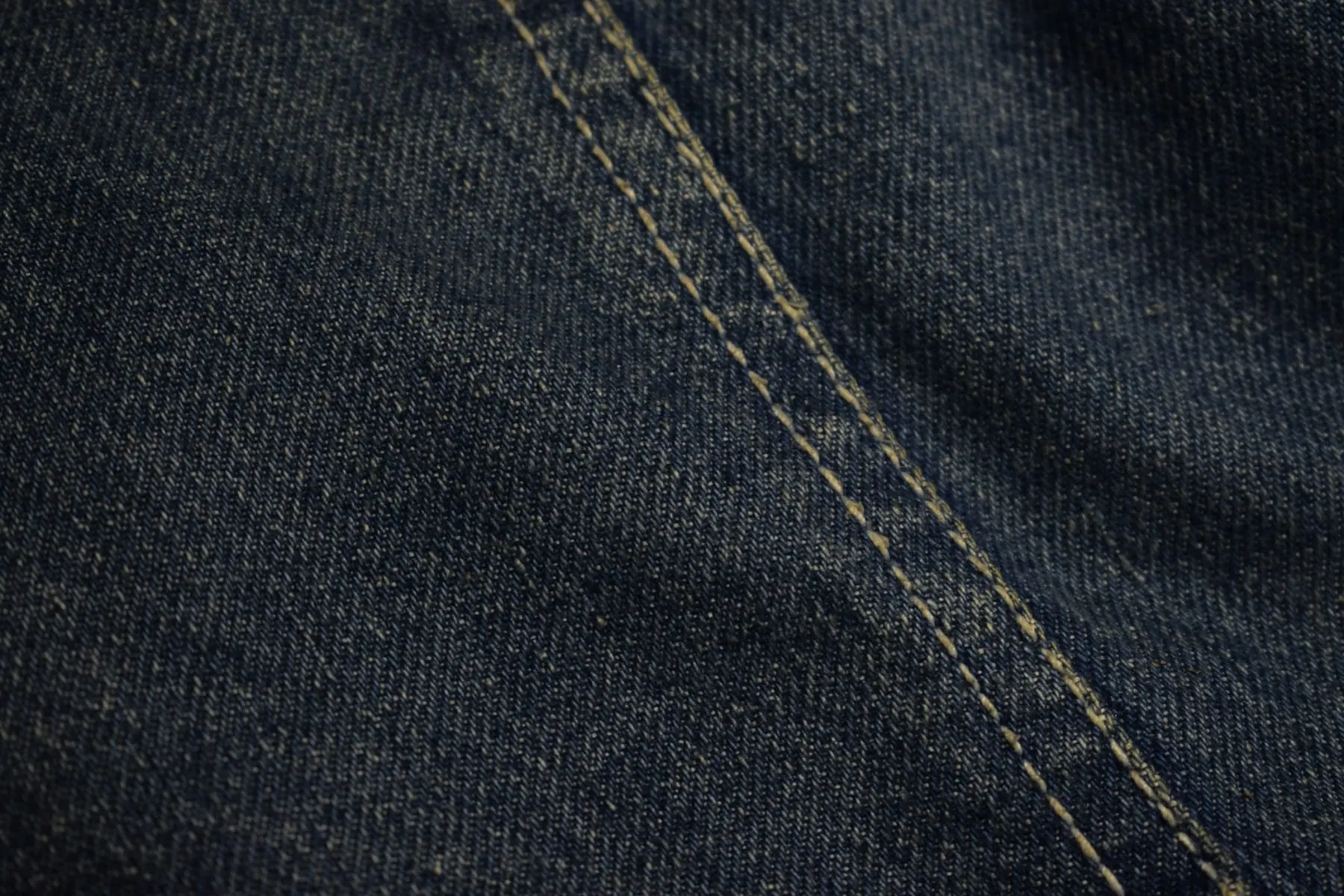
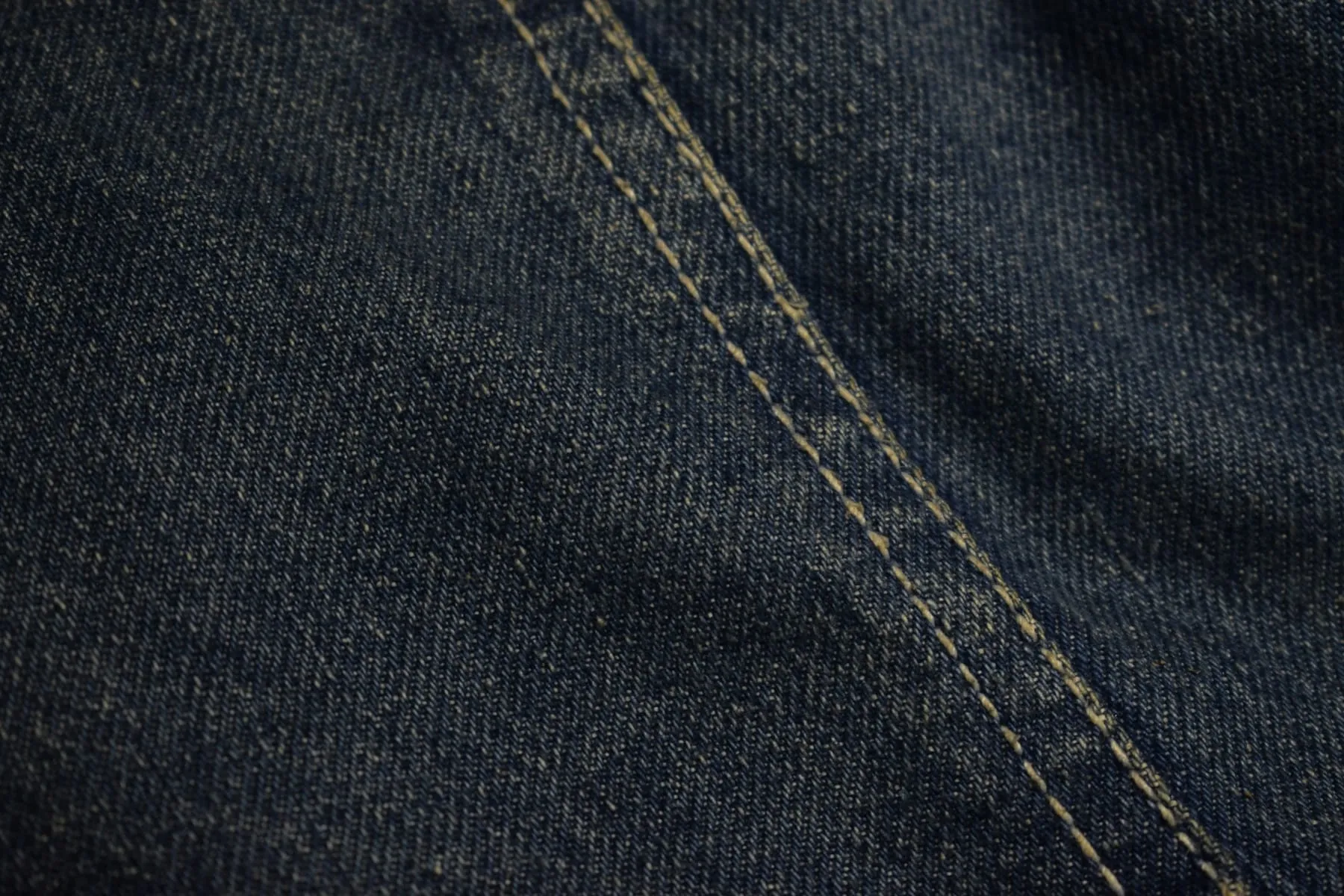
- Topstitching (the visible gold or contrast lines): a heavier topstitching, upholstery or “extra strong” thread, in the needle only.
The one rule everyone agrees on: keep regular thread in the bobbin. Closet Core says to use only regular thread in the bobbin with topstitching thread unless you’re on an industrial machine, because it gives better tension, less bulk and fewer snarls (Closet Core: tips for perfect topstitching). Johanna Lundström of The Last Stitch says household machines “are not optimised for heavy bobbin thread” and a tangled mess is normal if you try it (The Last Stitch: 10 tips for sewing jeans).
Step 3: Change the stitch length and tension
Denim’s thickness swallows short stitches, so lengthen them:
- Construction seams: around 2.5–3 mm. Closet Core calls 2.5–3 “a good all-around length.”
- Topstitching and thick layers: about 3–4 mm. Closet Core suggests 3.5–4 for thicker threads and fabrics, BERNINA’s blog says 2.8–3.8 mm works on most denims, and Janome calls 3.0–4.0 mm common for topstitching (Janome: topstitching tips).
Heavy thread usually needs more needle tension. If loops show on the underside, the needle tension is too loose; if the bobbin thread shows on top, it’s too tight. Lundström had to raise hers to 8 out of 10 for her test sample, but stresses there’s no magic number: fabric, thread and machine all change it. BERNINA’s fact sheet suggests trying around 6. Adjust the needle tension first; Janome says that’s usually the way to go, with bobbin tension only an occasional fix.
Make a test strip from scraps folded to the same number of layers as your thickest seam, and tune your needle, stitch length and tension on that before you touch the real garment.
Step 4: Flatten the bulk before you sew over it
The hardest stitches are where several seam allowances stack up. Reduce the stack first:
- Grade and trim seam allowances in bulky areas so they don’t all end at the same spot. Janome calls this the tip that’s often skipped but “can make a world of difference.”
- Press every seam flat, then press it in the direction it will be topstitched. BERNINA’s blog recommends pressing before and after topstitching.
- Hammer it. Gently pound thick crossings from the wrong side with a hammer or rubber mallet to compress the fibers. Seamwork, Closet Core and BERNINA all recommend this.
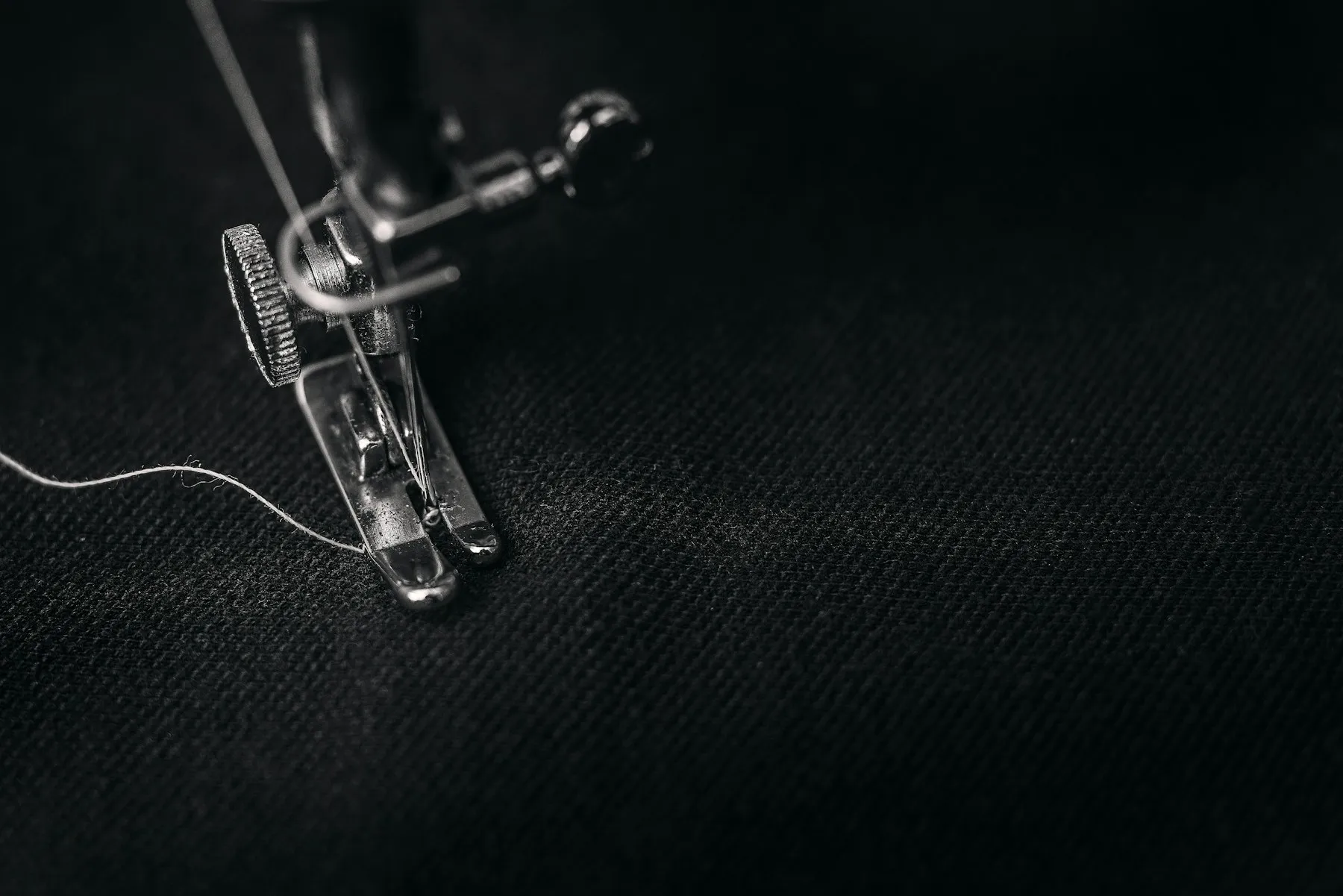
Step 5: Level the foot with a hump jumper
When the front of the presser foot climbs onto a thick seam while the back is still on thin fabric, the foot tilts, the feed dogs lose their grip and stitches skip or bunch. A hump jumper (also sold as a Jean-A-Ma-Jig or height compensation tool) is a small plastic shim you slide under the low side of the foot to keep it level. Lundström says it “will ensure even feeding and prevent skipped stitches.” Seamwork notes a pad of sticky notes works too, and Janome suggests folded scrap fabric or cardboard.
How to use one:
- Sew up to the thick seam and stop with the needle down.
- Lift the foot and slide the hump jumper under the back of the foot, behind the needle, so the foot sits level.
- Lower the foot and sew slowly onto the seam. Use the handwheel for the thickest stitches.
- As the front of the foot comes off the seam, stop with the needle down, move the shim in front of the needle under the toe, and continue until you’re past the hump.
Step 6: Sew slowly and let the machine feed
- Slow down at every crossing, and walk the needle through the thickest stitches with the handwheel. Closet Core suggests using the wheel “as you take off and land.”
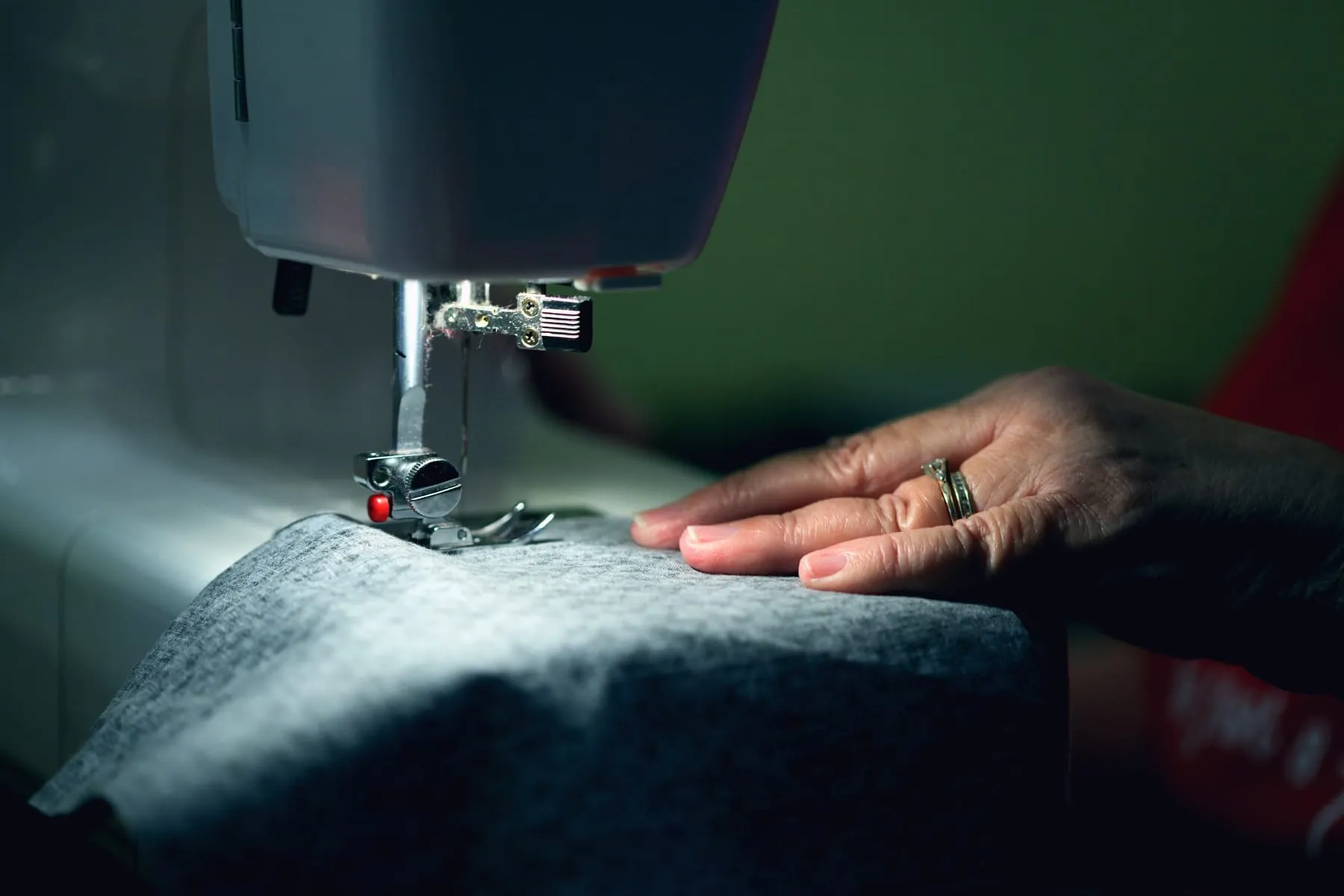
- Don’t push or pull. Let the feed dogs move the fabric. Seamwork suggests holding denim taut (gently, front and back) to prevent skipped stitches, which is different from dragging it.
- Start with the thread tails in hand. Holding the tails as you start stops the thread from being pulled down into the throat plate. Lundström suggests pulling them toward the back (The Last Stitch: 8 tips for perfect topstitching).
- Skip the backstitch on topstitching. Heavy thread jams when it reverses. Janome and Closet Core both suggest tying off thread tails on the wrong side instead, or overlapping a few stitches.
- A walking foot can help layers feed evenly, according to the BERNINA blog.
Step 7: Topstitch with an edge guide
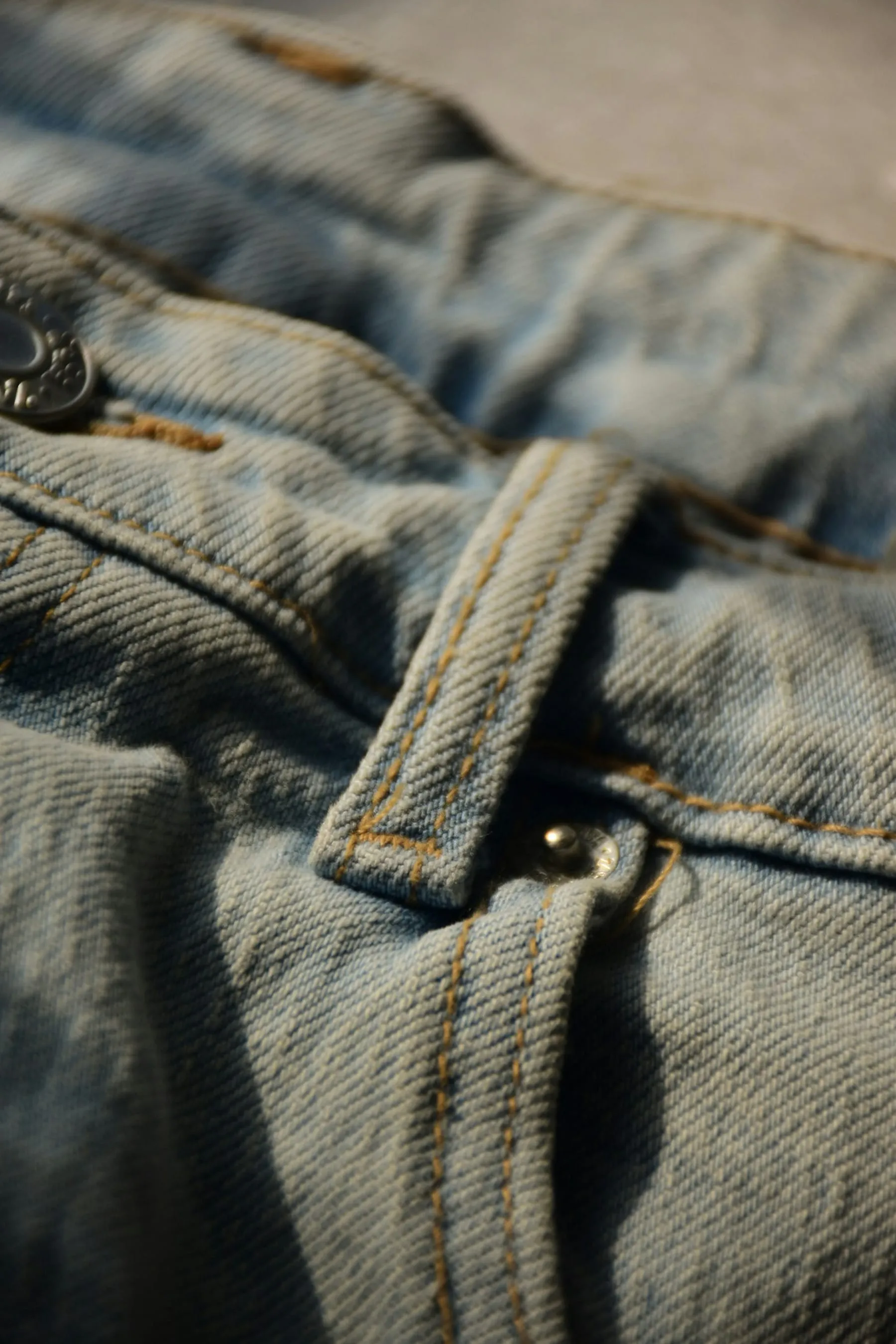
Classic jeans topstitching is two parallel rows. Closet Core starts the first row about ⅛” from the seam line with an edgestitch foot and sews the second row about ¼” away. BERNINA’s fact sheet suggests an edgestitch foot for the first row and a ¼” foot for the second. Lundström uses the outer edge of the presser foot, usually about 5 mm wide, as the guide for row two.
Whichever foot you use, watch the guide, not the needle. Closet Core’s version: “look where you’re going, not where you’ve been.” Sew practice rows on the inside or less visible areas first.
Quick troubleshooting for denim
| Problem | Likely cause | Try this |
|---|---|---|
| Skipped stitches at seam crossings | Foot tilting, dull needle | Hump jumper, new jeans needle, slow down |
| Needle breaks | Needle too fine, or pushing/pulling the fabric | Size up to 100/16, hammer the seam, let the feed dogs work |
| Loops under topstitching | Needle tension too loose for heavy thread | Raise needle tension and test on scraps |
| Bird’s nest under the fabric at the start | Thread tails pulled into the plate | Hold the tails at the start; don’t backstitch heavy thread |
| Topstitching thread frays or snaps | Needle eye too small | Switch to a topstitch needle |
| Machine stalls on the hem | Too many layers | Grade, hammer, and walk the needle over with the handwheel |
Before you cut: prewash your denim
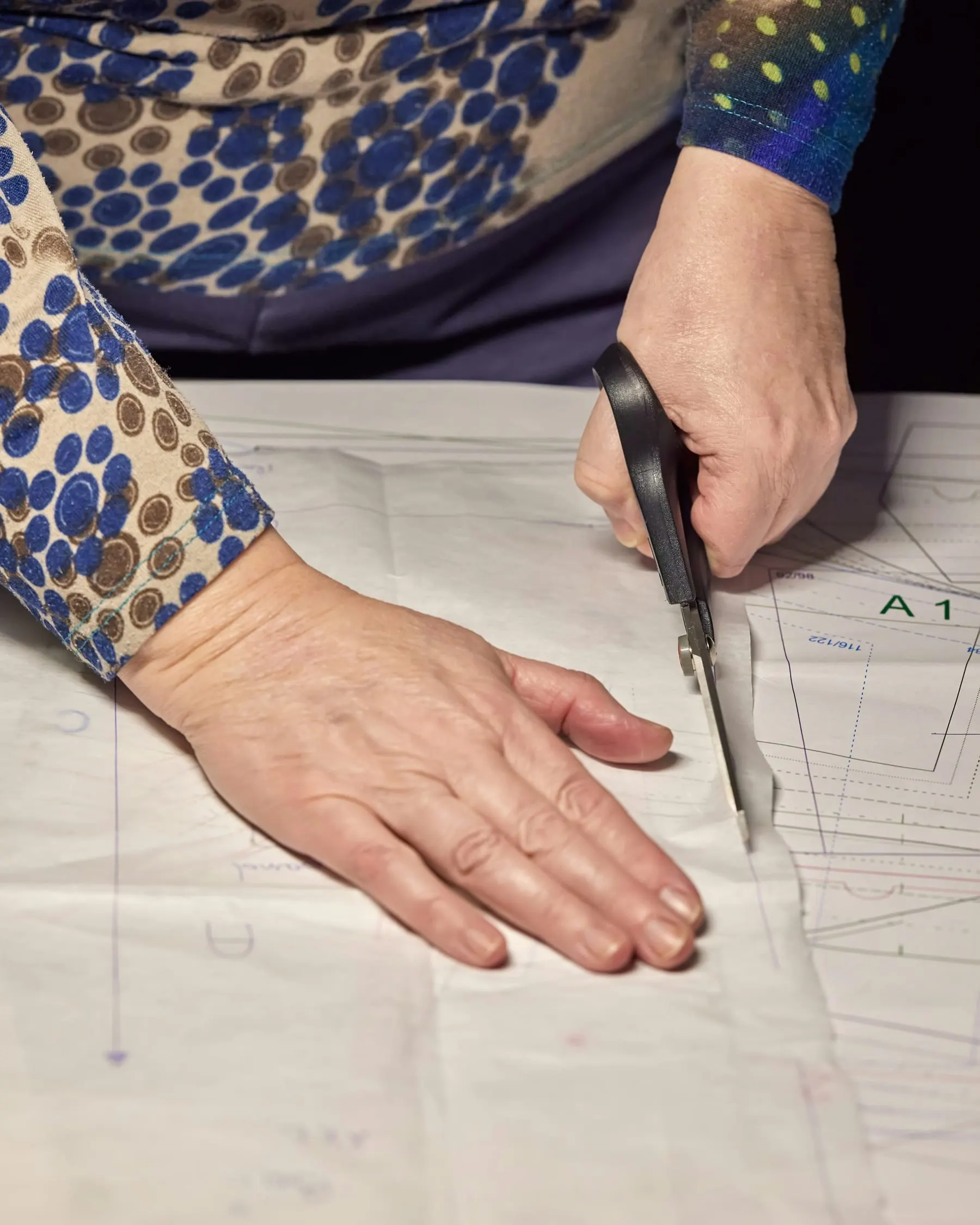
Rigid cotton denim can shrink in the first wash, so wash and dry it the way you’ll wash the finished garment before cutting. Our guide to prewashing fabric covers how, and our jeans yardage guide shows how much extra to buy for shrinkage.
Common questions
Can a regular sewing machine sew denim?
Yes. Most home sewing machines sew two or three layers of denim easily. The challenge is thick seam crossings on jeans, which can reach six or more layers. A fresh jeans needle, a longer stitch, hammered seams, a hump jumper and slow sewing get most machines through them.
What needle should I use to sew denim?
A jeans (denim) needle: size 90/14 for light and medium denim and 100/16 for heavy denim, per Seamwork. Schmetz says universal needles in sizes 90–110 also work, but recommends its jeans needle for its reinforced blade. Use a topstitch needle when sewing with heavy topstitching thread.
What thread should I use for denim?
All-purpose polyester thread for construction seams, and a heavy topstitching, upholstery or extra-strong thread for visible topstitching, threaded in the needle only. Keep regular all-purpose thread in the bobbin on a home machine.
What stitch length should I use for denim?
About 2.5–3 mm for construction seams and 3–4 mm for topstitching and thick layers. Closet Core, BERNINA and Janome all give ranges inside 2.5–4 mm. Test on scraps first.
Why does my machine skip stitches on denim?
Usually a dull or too-fine needle, or the presser foot tilting as it climbs a thick seam. Change to a fresh jeans needle in a bigger size, level the foot with a hump jumper, flatten bulky seams with a hammer, and sew slowly over crossings.
Can I use topstitching thread in the bobbin?
Not on most home machines. Closet Core and The Last Stitch both say to use regular thread in the bobbin with topstitching thread on top; heavy bobbin thread usually causes tension problems and tangles. Industrial machines are the exception.
What is a hump jumper?
A small plastic shim that you slide under the low side of the presser foot when sewing over a thick seam, so the foot stays level and keeps feeding. Folded scraps, cardboard or a pad of sticky notes do the same job.
Do I need a walking foot to sew denim?
No, but it can help. BERNINA’s blog says a walking foot feeds all layers evenly and helps prevent skipped stitches and shifting. Most denim sews fine with a regular presser foot and the right needle.
Sources
- Schmetz: The classic: blue denim jeans (universal 90–110, jeans needle, twin needle, belt loops, pocket and hem needle sizes)
- Seamwork: A guide to sewing denim (90/14 and 100/16 needles, thread, mallet, holding fabric taut, longer stitches, Jean-A-Ma-Jig and sticky notes)
- Closet Core Patterns: Tips for perfect topstitching and How to sew flat felled seams (thread, bobbin rule, stitch length, tension, bar tacks, ⅛” and ¼” rows, hammering, hump jumper)
- The Last Stitch (Johanna Lundström): 10 tips for sewing jeans (needle tension, regular bobbin thread, height compensation tools, two spools, edge-guide foot) and 8 tips for perfect topstitching (pulling thread tails back, overlapping instead of backstitching)
- BERNINA blog: Top tips for professional topstitching (topstitch needle, thread, 2.8–3.8 mm stitch, pressing, hammering, hump jumper, walking foot)
- BERNINA Australia: Fact sheet: Making jeans (PDF) (topstitching thread on top only, 3–3.5 mm stitch, tension, triple stitch and two-thread options, edgestitch and ¼” feet)
- Janome: Topstitching tips and tricks (3.0–4.0 mm stitch, tension troubleshooting, grading seams, no backstitching, homemade hump jumper)
Free printable · The newsletter
Never guess yardage again.
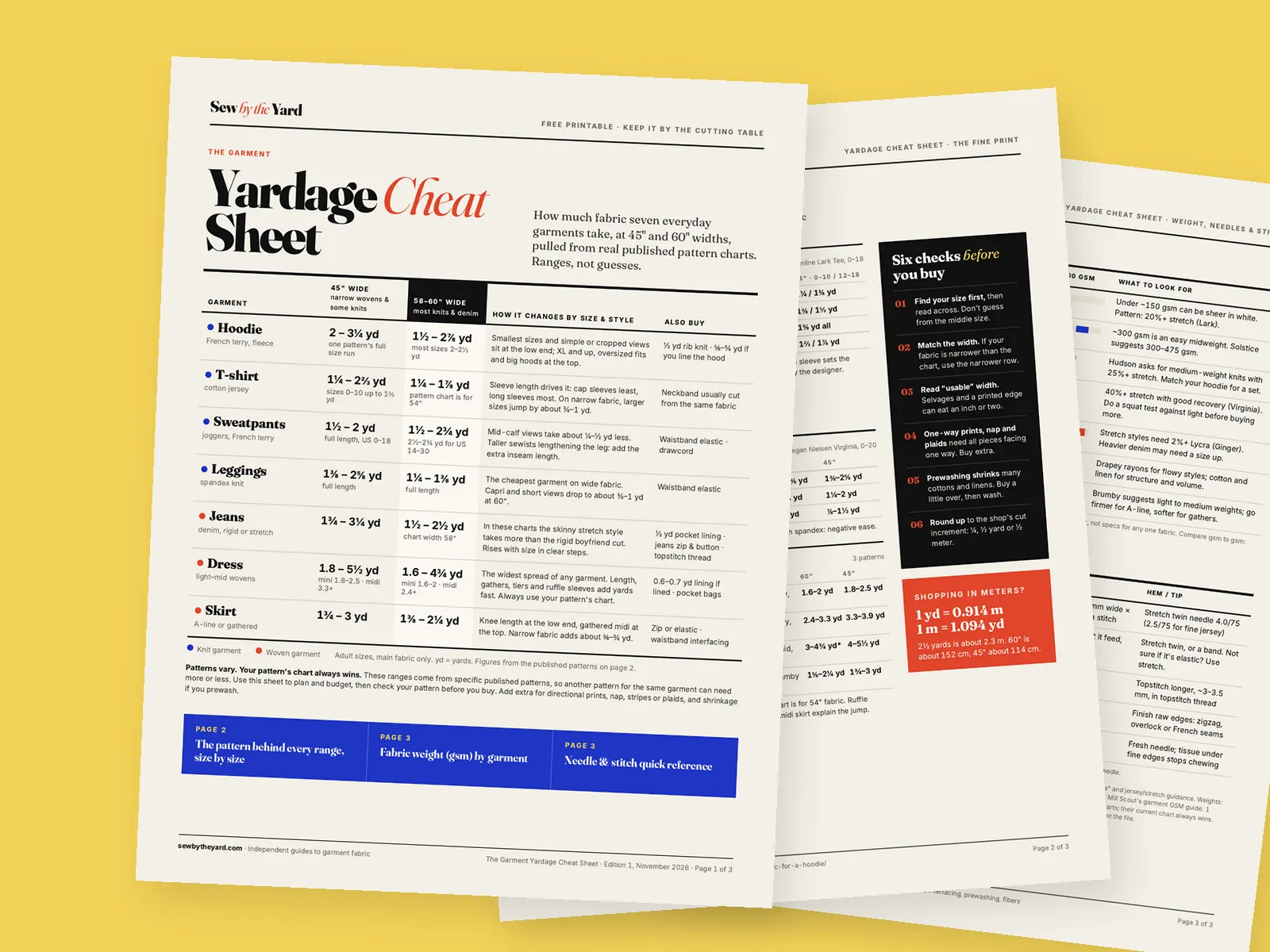
Join the Sew by the Yard newsletter and get The Garment Yardage Cheat Sheet: fabric amounts for seven garments at 45" and 60", a fabric-weight guide and a needle chart, on three printable pages.