Knit Hem Finishes Compared: Twin Needle, Zigzag, Coverstitch and Bands
Which hem should your knit garment get? Twin needle, zigzag, coverstitch, rib bands, stretch blind hem, binding and lettuce edges compared by stretch, look and machine.
Pick a knit hem by how much it has to stretch, then by the look you want and the machines you own. A twin needle gives a ready-to-wear double row on T-shirts and dresses, using a regular machine. A narrow zigzag stretches further, so it suits leggings and activewear. A coverstitch is the most professional and the stretchiest, but it needs a separate machine. Rib bands skip the hem on sweatshirts, and a stretch blind hem hides the stitching on dressier knits.
This is a decision guide. It compares the finishes side by side so you can choose one before you start. For the step-by-step on the most common one, see how to hem knits with a twin needle. For seams, needles and the rest of a knit garment on a regular machine, start with how to sew knits without a serger.
Knit hem finishes at a glance
| Finish | Machine | Stretch | Looks like | Best for |
|---|---|---|---|---|
| Twin needle | Sewing machine with a zigzag function | Moderate; can pop if stretched hard | Two straight rows outside, a zigzag inside | T-shirt, dress and sleeve hems |
| Narrow zigzag | Any sewing machine with a zigzag | High | A visible zigzag line | Leggings, activewear, casual knits |
| Coverstitch | Coverstitch machine or a combo serger | High | Two or three straight rows outside, a looper chain inside | Anyone who hems knits often |
| Rib or self-fabric band | Sewing machine or serger | Follows the band | No hem stitching; a folded band | Sweatshirts, hoodies, cuffs, straight hems |
| Stretch blind hem | Sewing machine with a stretch blind-hem stitch | Moderate | Almost invisible from the right side | Knit skirts, dresses, unlined knit jackets |
| Single-fold straight stitch | Any sewing machine | Very little | One neat straight row | Wide hems that never stretch, like a boat neck |
| Knit binding or fold-over elastic | Sewing machine or serger | Moderate to high | A narrow wrapped edge | Necklines, armholes, curves, lingerie |
| Lettuce edge | Sewing machine or serger | Decorative | A rippled, thread-wrapped edge | Light jersey dresses, pajamas, kids’ clothes |
| Raw edge | None | Full | A cut edge, which may curl | Stable knits and deliberate design choices |
The stretch column is relative, drawn from the sources at the end of this guide. We haven’t run stretch tests of our own, so test your chosen finish on a scrap of the real fabric.
Does a knit hem need to stretch?
Usually, yes. As Threads magazine’s Carol J. Fresia puts it, “unless you’re hemming a garment with a very large circumference, the hem must be able to stretch” (Threads). Craftsy makes the same point: hem a knit like a woven and “the fabric may become wavy or the stitches may pop” when you pull the garment over your head (Craftsy).
So ask how far each hem is stretched in wear:
- A lot: leggings ankles, fitted cuffs, swimwear and activewear edges. Choose a zigzag, a coverstitch or an elastic finish.
- A little: a loose T-shirt or dress hem. A twin needle has enough give.
- Hardly at all: a wide hem or a wide boat neckline. Even a single straight stitch can work there, according to Oliver + S (Oliver + S).
Two general rules from Craftsy apply to every finish below. Knits don’t fray like wovens, so you only need to turn the hem under once, and stabilizing the hem allowance, especially on lightweight knits, “will significantly improve the outcome.”
Twin needle: the one-machine T-shirt hem
A twin needle is two needles on one shank. It sews two parallel straight rows on the right side while the single bobbin thread zigzags between them underneath, and that zigzag is what lets the hem stretch (Craftsy). Schmetz’s stretch twin needle comes in 2.5 mm and 4.0 mm spacing for knits (Schmetz).
- Pros: it looks closest to a store-bought tee on a regular machine. Oliver + S calls it a “professional finish” and uses it for almost all knit T-shirts and dresses.
- Cons: setup “can take some tinkering,” and it is “prone to popping or breaking if standard bobbin thread used” (Oliver + S). Johanna Lundström of The Last Stitch says it is “generally less elastic than a coverstitch seam,” can break when stretched to its limit, and is more prone to tunneling, a ridge between the rows (The Last Stitch). Pattern designer Pamela Leggett, writing for Threads, says she has found twin-needle stitching “tends to pop” (Threads).
- Choose it when: you own one machine and you’re hemming tees, knit dresses or sleeves that don’t stretch much in wear.
Threading, settings and fixes for tunneling are in our twin-needle hem tutorial.
Narrow zigzag: the stretchiest hem on a regular machine
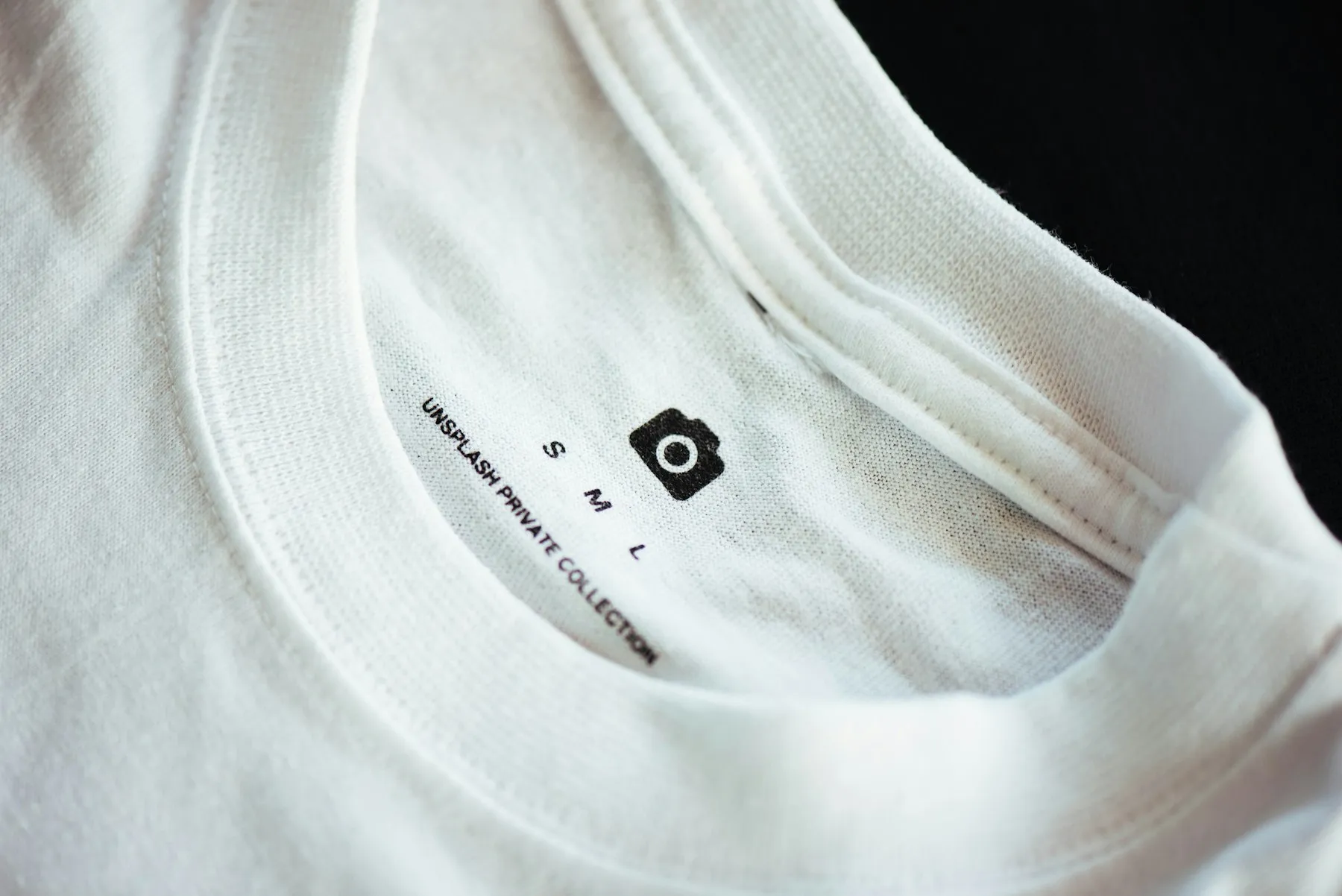
Turn the hem up and stitch it with a zigzag from the right side. Craftsy notes that “a narrow zigzag stitch is less noticeable.” For a starting setting, Leggett hems with a narrow zigzag 1.0 mm wide and 2.5 mm long, “so the hem has a little give” (Threads).
- Pros: works on any machine with a zigzag, costs nothing extra, and keeps more stretch than a twin needle. Oliver + S calls the single-fold zigzag the hem to use “a lot of the time.”
- Cons: it can stretch the hem as you sew, so it “grows” and goes wavy, and it “can look a bit amateurish” (Oliver + S).
- Choose it when: stretch matters more than looks, as on leggings, activewear and kids’ knits, or when a twin needle keeps popping.
A zigzag hem is only as flat as the fabric under it. Craftsy recommends stabilizing the hem and using a walking foot, and Leggett steams the finished hem to shrink out any waves. Our guide to wavy knit seams covers presser-foot pressure and other fixes.
Coverstitch: the ready-to-wear hem
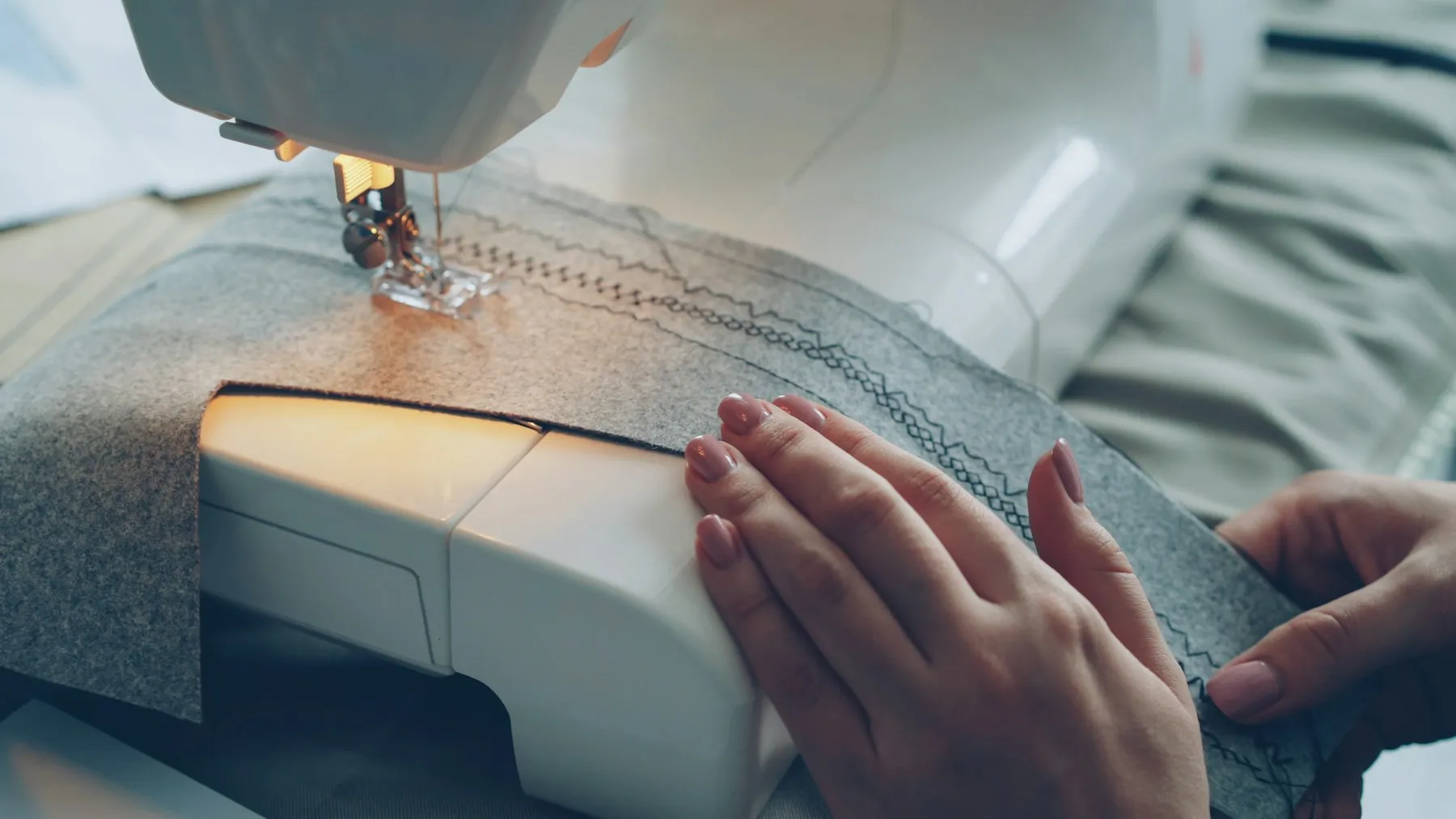
A coverstitch machine sews straight rows on the right side while a looper thread crosses back and forth underneath, forming a grid or chain. The Last Stitch describes the result as “a very elastic and durable stitch,” and says that when hemming stretchy Lycra knits “a coverstitch is usually vastly better than a regular sewing machine.”
- Pros: Craftsy calls it “the ideal way to hem most knit garments,” with “maximum stretch.” Leggett adds that it covers the edge of the hem allowance inside the garment and uses differential feed, so the hem isn’t stretched out as you sew. Threads also notes you can sew it with the loopy side out as a sporty, decorative stitch.
- Cons: it’s a separate machine. A regular serger can’t do it: Lundström points out you can’t sew a straight stitch and folded hem with a stand-alone serger. Some combination machines serge and coverstitch, but you may have to rethread to switch.
- Choose it when: you sew knit garments often enough that hems are a regular bottleneck. Lundström doesn’t say everyone needs one, but says it is “immensely helpful” if you sew a lot of knits.
Bands: skip the hem entirely
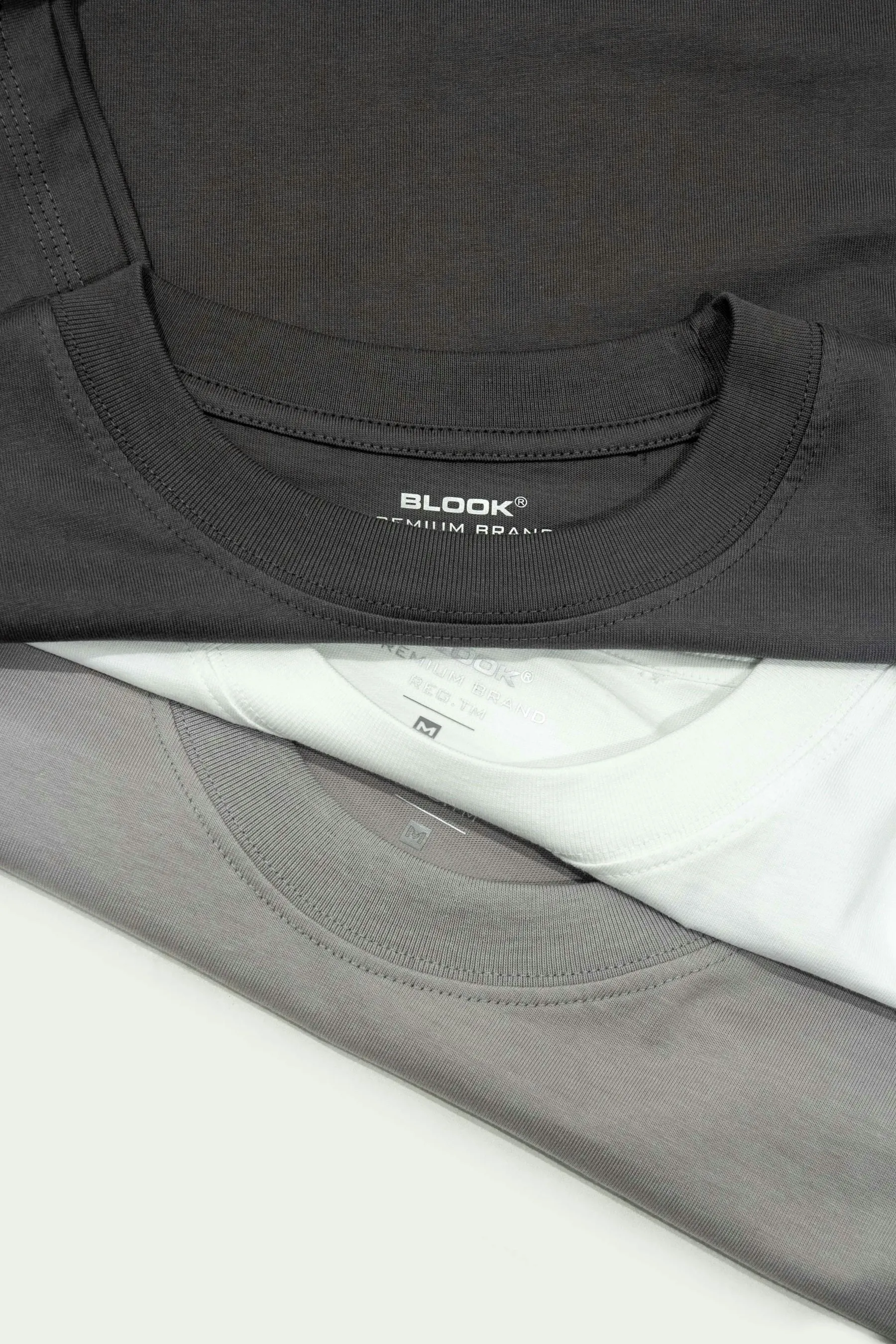
A folded band of rib knit or self-fabric, sewn to the edge, replaces the hem. Heather Handmade calls a neckband, cuff or waistband “the fastest way to ‘hem’ knit fabric” (Heather Handmade), and Craftsy says the fabric doesn’t need stabilizing for this finish.
- How: Craftsy cuts the band with the stretch going the same way as the garment’s, slightly shorter than the opening so it won’t go baggy, joins it into a loop, folds it in half lengthwise and serges or zigzags it to the right side.
- Pros: neat and consistent, and there’s no hem stitching to wave or pop.
- Cons: you need extra fabric, and it doesn’t really work on curved hems or hems with side splits, as Sew Much More Fun notes (Sew Much More Fun).
- Choose it when: you’re making a sweatshirt, hoodie or joggers, or any straight hem you’d rather not topstitch.
For band lengths and technique, see how to sew hoodie rib cuffs and how much ribbing a hoodie takes.
Stretch blind hem: when you don’t want stitching to show
Twin-needle, zigzag and coverstitch hems all show from the outside. Threads notes that this visible stitching has “a casual and quick look” that may not suit a carefully made dress or skirt (Threads). A stretch blind-hem stitch sews a narrow zigzag along the hem allowance, instead of the straight stitches of a regular blind hem, with an occasional deep zigzag that bites into the garment. Threads calls it “imperceptible from the right side.”
Craftsy recommends it for garments “such as knit pencil skirts or unlined knit blazers.” Press the hem up, fold it back toward the right side leaving a narrow edge showing, and sew from the wrong side so the wide bite catches the fold every few stitches. Test the width and needle position on a scrap first. By hand, Threads suggests a catchstitch or blind catchstitch for the least visible hem.
The other finishes, briefly
- Single-fold straight stitch. Oliver + S uses a long straight stitch only where the hem “doesn’t need to stretch much or at all,” such as a wide boat neck. It’s neat and quick but has less stretch than a zigzag. Marcy Tilton, writing for Threads, prefers two rows of single-needle topstitching to a twin needle on soft, crushable knits, after fusing strips of knit interfacing into the hem (Threads).
- Knit binding. A strip of knit wrapped around the edge. Oliver + S cuts it a little more than three times the finished width (1¾ inches for a ½ inch finish) and about 75% of the edge’s length. It doesn’t change the garment’s length and works on tight curves. For necklines, also see how to sew a T-shirt neckband.
- Fold-over elastic. Elastic with a fold down the middle that wraps the edge. It’s used on underwear, lingerie and some sportswear; the stitching shows (Oliver + S). For swimwear, activewear and dancewear, Heather Handmade sandwiches elastic inside a turned edge and topstitches it with a zigzag or twin needle.
- Lettuce edge. A dense zigzag sewn over the folded edge while you stretch the fabric; as it recovers, the edge ripples. Oliver + S sets a short, smooth zigzag at least ⅛ inch wide, stretches evenly, then trims the excess (Oliver + S). Sewing Bee Fabrics sews along the direction with the most stretch and says fabric choice matters more than technique (Sewing Bee Fabrics).
- Rolled hem. A narrow, decorative serger hem. Oliver + S says it needs a serger and can pull off fine knits.
- Raw edge. Knit edges don’t fray, but they can roll or run (Heather Handmade), and “many knit fabrics will curl if the edge is raw” (Oliver + S). If you leave it, cut with a rotary cutter for a clean line.
Decide how far the hem stretches in wear first. Looks and equipment come second.
Which hem for which garment?
| Garment | First choice | Alternatives |
|---|---|---|
| T-shirt hem and sleeves | Twin needle or coverstitch | Narrow zigzag |
| Leggings and activewear | Coverstitch or narrow zigzag | Elastic turned inside |
| Swimwear | Elastic turned inside, zigzagged | Coverstitch |
| Sweatshirt, hoodie, joggers | Rib or self-fabric bands | Twin needle or coverstitch on a straight hem |
| Knit dress or skirt, dressier | Stretch blind hem or hand catchstitch | Twin needle |
| Wide boat neck or very loose hem | Single straight stitch | Twin needle |
| Neckline or armhole | Neckband or knit binding | Twin-needle topstitching |
| Light jersey dress, pajamas, kids’ clothes | Lettuce edge | Twin needle |
Whatever hem you choose: prepare it the same way
Most knit hem trouble starts before you stitch. These steps help every finish above:
- Stabilize the hem allowance. Craftsy lists fusible knit interfacing, spray starch, wash-away or tear-away stabilizer and knit stay tape. Threads cuts interfacing so it stretches the same direction as the hem. Our interfacing basics covers which types stay soft on knits.
- Fuse the hem up. Leggett fuses 1-inch double-sided stay tape inside the cut edge, uses the paper backing to press an even crease, then fuses the hem up before she stitches.
- Use a knit needle. A ballpoint or stretch needle slides between the knit loops instead of piercing them (Craftsy). Our needle guide for knits explains which.
- Feed evenly. A walking foot keeps the two layers moving together, “which results in a flat, instead of wavy, hem” (Craftsy).
- Steam it back. If the hem stretched while you sewed, Leggett hovers the iron and steams out the waves. The fused stay tape has “thermal memory,” so heat pulls the hem back into shape.
Before you hem: keep our free needle and thread guide by the machine. It puts twin-needle sizes, stretch needles and stitch settings on one page.
Common questions
What is the best way to hem knit fabric without a coverstitch machine?
On a regular machine, use a twin needle for T-shirts and dresses, where you want two neat rows, and a narrow zigzag where the hem has to stretch more, such as leggings. On sweatshirts, a rib band skips the hem altogether. Stabilize the hem allowance first, whichever you choose.
Is a twin needle as good as a coverstitch?
It looks similar from the outside, but it isn’t the same. The Last Stitch says a twin needle is generally less elastic than a coverstitch, can break when stretched to its limit and tunnels more easily. For most loose tees and dresses it is enough; for stretchy Lycra knits, a coverstitch is usually much better.
Can you hem knits with a straight stitch?
Only where the hem barely stretches. Oliver + S uses a long straight stitch for edges like a wide boat neckline, but warns it has less stretch than a zigzag. On a hem that goes over your head, hands or feet, a straight stitch can pop.
Do you need to finish the raw edge of a knit hem?
No. Knits don’t fray, so you can turn the hem up once and stitch. Serging the edge first is optional, but Oliver + S says it helps curly cotton-spandex hems lie flat, and Craftsy notes it makes a twin-needle hem look more like a coverstitched one inside.
How do I stop a knit hem from going wavy?
Stabilize the hem allowance with fusible knit interfacing or stay tape, use a walking foot or lighter presser-foot pressure, and let the machine feed the fabric without pulling. If it still waves, steam it: Pamela Leggett hovers the iron over the hem to shrink the waves out. More fixes are in why knit seams go wavy.
Sources
- Craftsy (Andrea Brown): How to hem knit fabric five different ways (single turn, stabilizers, walking foot, zigzag, twin needle, serged edge, stretch blind hem uses, bands, coverstitch and differential feed)
- Oliver + S: How to hem everything: knit fabrics (raw edge, single-fold zigzag and straight stitch, rolled hem, lettuce hem, knit binding proportions, fold-over elastic, twin-needle pros and cons)
- Oliver + S: Lettuce hem by sewing machine (zigzag settings, stretching evenly, trimming)
- The Last Stitch (Johanna Lundström): Coverstitch buyer’s guide (how a coverstitch forms, twin needle vs coverstitch, serger vs coverstitch, combination machines)
- Threads (Carol J. Fresia): Expert tips for finishing knits (when hems must stretch, interfacing direction, catchstitch, twin needle, cover stitch from either side)
- Threads (Pamela Leggett): How to hem knits faster with stay tape (1-inch double-sided stay tape, 1.0 × 2.5 mm zigzag, coverstitch benefits, twin needle popping, steaming the hem)
- Threads: Sew a stretch blind hem by machine (how the stretch blind-hem stitch differs, when to use it)
- Threads (Marcy Tilton): Fine details for knits (tunneling on soft knits, interfacing strips, two rows of topstitching)
- Heather Handmade: How to finish knit fabric edges (raw edges rolling and running, bands, fold-over elastic, elastic hems for activewear and swimwear)
- Sew Much More Fun: Hemming stretchy fabrics: my top tips (fabric band hems and their limits, coverstitch vs twin needle)
- Sewing Bee Fabrics: How to sew a lettuce hem (sewing with the direction of most stretch, fabric choice)
- Schmetz: Stretch Twin needle (2.5 and 4.0 mm spacing)
Free printable · The newsletter
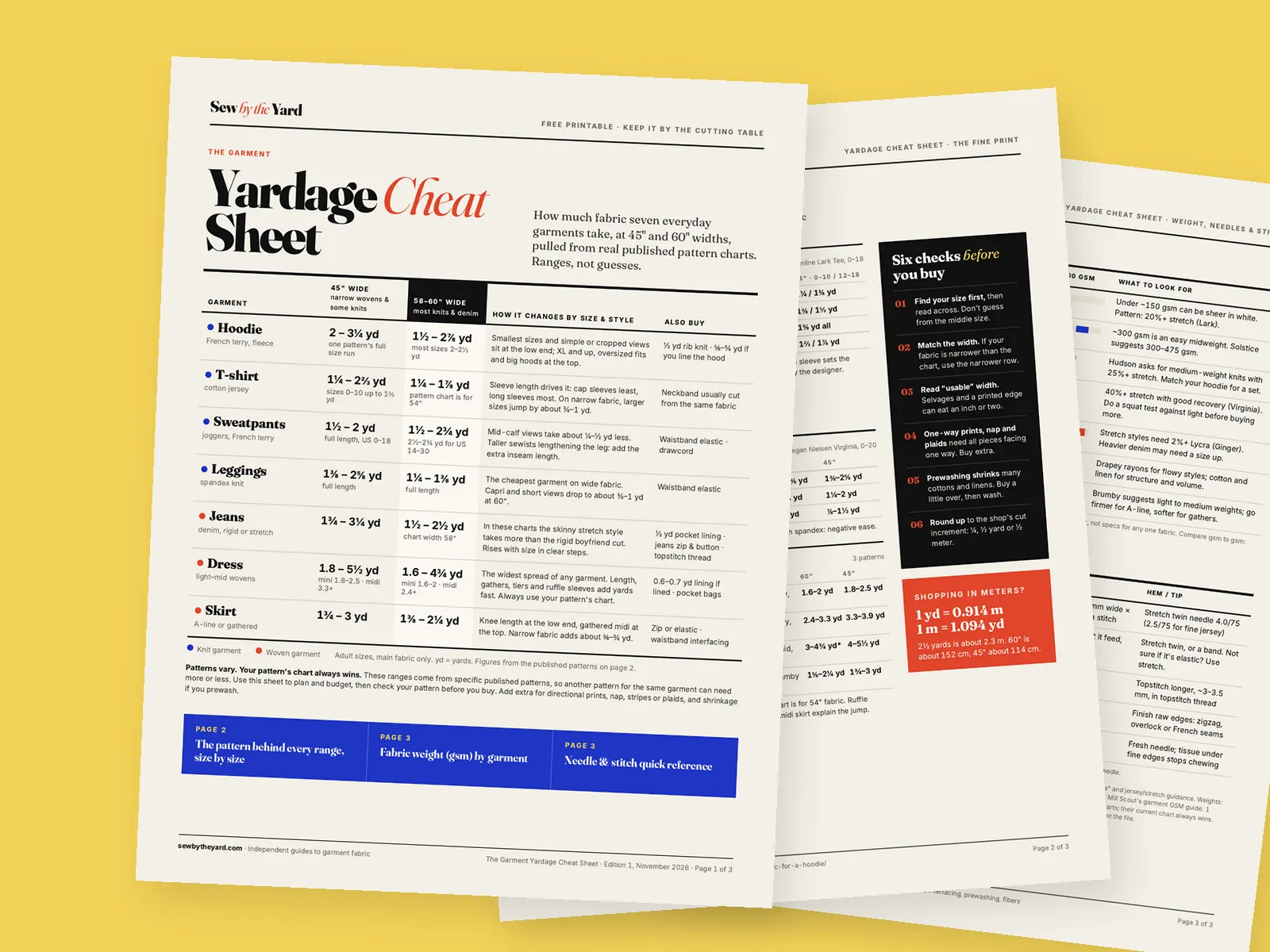
Never guess yardage again.
Join the Sew by the Yard newsletter and get The Garment Yardage Cheat Sheet: fabric amounts for seven garments at 45" and 60", a fabric-weight guide and a needle chart, on three printable pages.