Sewing Machine Needles for Knits: Jersey vs Stretch vs Universal
Which needle to use for knit fabric: jersey (ballpoint) for knits without spandex, stretch for spandex knits, and when a universal needle is fine. Sizes too.
Skipped stitches, little holes along a T-shirt seam, thread that keeps snapping on leggings: on knits, most of these trace back to the needle. The packets don’t make it easy. You’ll see “ballpoint,” “jersey,” “stretch,” “super stretch” and “universal,” sometimes on needles that look identical. Here’s what each one is for, based on what the needle makers themselves publish, and how to pick a size.
Which needle should you use for knit fabric?
Needle maker Schmetz names four needles for knits and gives a simple rule for the two you’ll use most (Schmetz, Four needles for jersey):
| Your knit | Needle | Why |
|---|---|---|
| No spandex: cotton jersey, interlock, French terry, sweatshirt fleece | Jersey (ballpoint) | Rounded tip pushes the knit loops aside instead of piercing them |
| With spandex, or very elastic: cotton-spandex jersey, activewear, swim, stretchy rib | Stretch | Medium ball point plus a scarf and eye shape that stop skipped stitches |
| Elastic knit with thick thread or bulky seam crossings | Super stretch | Stretch-style needle with a wider eye and groove and a stronger blade |
| Delicate, very elastic knits such as lingerie fabrics | Black super stretch | Super stretch with a nonstick coating for gentle handling |
| Not sure if the fabric has spandex | Stretch | Schmetz’s own advice when in doubt |
If you only buy two packets, buy jersey needles and stretch needles. Those cover nearly every T-shirt, hoodie, sweatpant and legging fabric.
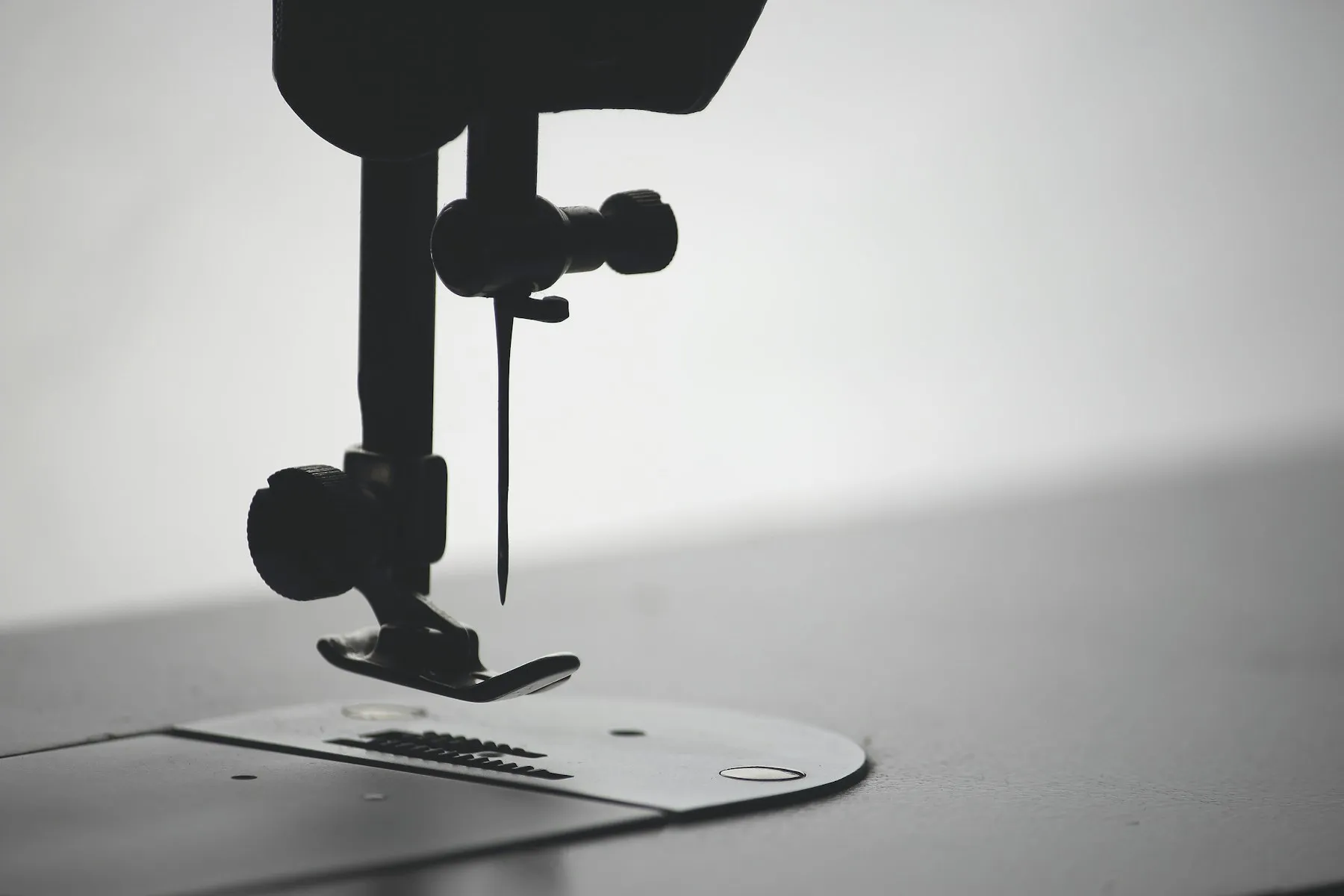
Jersey (ballpoint) needles
A jersey needle has a medium ball point. Schmetz describes it as rounded “so that it can push the fibers of the fabric to the side, penetrating the gaps in between,” which keeps the knit loops from being damaged. Schmetz recommends it for knits without spandex. Organ, the other big household needle maker, lists its jersey needle (the same 130/705 H SUK system) for single jersey and fleece (Organ Needle Index, PDF).
- Use it for: 100% cotton jersey, interlock, French terry, sweatshirt fleece, most sweater knits.
- Sizes: Schmetz makes it from 70 to 100 (Schmetz Needle ABC, PDF).
- Also sold as: ballpoint, jersey, SUK or 15x1 H SUK needles.
Stretch needles
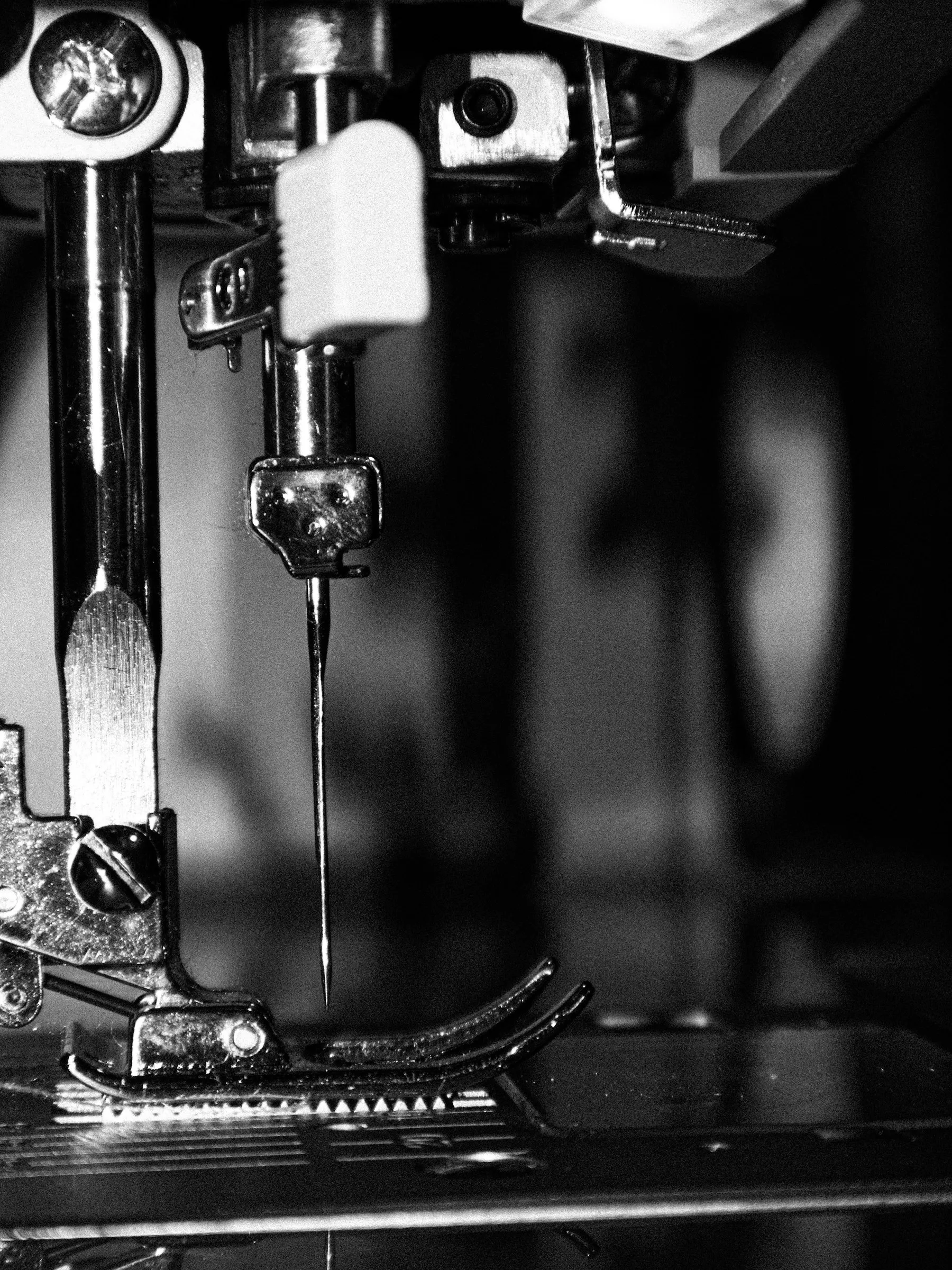
A stretch needle also has a medium ball point, but Schmetz adds “a special scarf shape and unique eye section,” and the needle is flatter so it sits closer to the machine’s hook. That matters because elastic fabric flexes as the needle rises, and the hook can miss the thread loop. The result is the skipped stitch, which Schmetz calls a common issue in elastic materials.
Schmetz recommends a stretch needle:
- for knits with spandex (elastane, Lycra)
- for highly elastic fabrics
- whenever skipped stitches are a problem
- when you aren’t sure whether your fabric is elastic
Schmetz makes stretch needles in 65, 75 and 90 only, and also as a stretch twin needle for hems (Schmetz Needle ABC). For T-shirt hems, Schmetz suggests the stretch twin in size 75 with 2.5 or 4.0 mm spacing; our twin-needle hemming guide walks through it.
Super stretch and black super stretch
Schmetz positions the super stretch needle as an alternative to the stretch needle: it’s flat like the stretch needle to prevent skipped stitches, with a wider eye and thread groove for thicker threads and a blade designed to resist breaking on thick seams. Pick it when you’re topstitching activewear with heavier thread, crossing bulky seams in a waistband, or breaking needles. The black super stretch is the same design with a nonstick coating, aimed at delicate, highly elastic fabrics like lingerie knits.
Organ’s equivalent is also called Super Stretch (system HA x 1 SP), which it lists for Lycra, sportswear fabrics and general elastics, with a scarf shaped “to avoid skipped stitches by giving enough clearance to the rotating hook” (Organ Needle Index). Sewists who make a lot of swim and activewear often swear by one brand or the other; both are built for the same job.
Can you use a universal needle on knits?
Sometimes. A universal needle has a slightly rounded point, sharper than a ballpoint, and Schmetz says it handles “a wide range of materials” (Schmetz Needle ABC). Its four-needles page also notes that many fabrics can be sewn with a universal needle. The Last Stitch puts it well: universals “can work for stitching knit fabrics, but they are not optimised for knits” (The Last Stitch).
In practice, a fresh universal needle often sews a stable knit like interlock or a heavy sweatshirt fleece without trouble. Switch to a jersey or stretch needle as soon as you see:
- skipped stitches, especially on spandex knits
- small holes or runs along the stitching line on fine jersey
- snagged or pulled loops on the right side
What size needle for knits?
Needle sizes are given two ways, metric (NM) and US, as in 80/12. The NM number is 100 times the blade diameter in millimeters, so an NM 90 needle is 0.9 mm thick, and with both systems “the higher the number, the thicker the needle” (Schmetz Needle ABC).
Typical starting points (from The Last Stitch’s knit needle guide and Schmetz’s size ranges; always test on your fabric):
| Knit weight | Examples | Starting size |
|---|---|---|
| Light | Fine jersey, rayon or bamboo jersey, mesh | 70/10 or 75/11 |
| Medium | T-shirt jersey, interlock, leggings knits | 75/11 or 80/12 |
| Heavy or bulky seams | Sweatshirt fleece, French terry, ribbed cuffs and waistbands | 90/14 |
The Last Stitch calls 80/12 “a good standard size” for most knits and reaches for 90/14 when stitching over bulky layers. Go too thick and you’ll get holes: Schmetz warns that “if your needle is too thick, then even the right type of needle can produce ugly holes.” Match the needle to your thread too. Schmetz’s check: hold the threaded needle on the thread at about 45 degrees. If the size is right, the needle slides slowly down the thread under its own weight.
Change the needle more often than you think
A worn needle causes the same problems as the wrong one. Schmetz lists frayed or broken thread, skipped or uneven stitches, puckered seams, damaged fabric and a popping sound while sewing, and its rule of thumb is to replace the needle after about 8 hours of sewing, or at the start of every new project. Its quick check: push the needle through an old pair of sheer tights. If it catches or pulls threads, the point is damaged.
Organ adds that blunt or bent needles cause skipped stitches and thread breakage. The Last Stitch has one more fix that’s easy to miss: push the needle all the way up into the clamp before tightening the screw, because a needle that sits low causes skipped and uneven stitches.
Troubleshooting knit needle problems
| Problem | Likely needle cause | Try |
|---|---|---|
| Skipped stitches on a spandex knit | Universal or jersey needle | A stretch needle, then a super stretch |
| Skipped stitches on any knit | Worn needle, or needle not fully inserted | A fresh needle pushed all the way up into the clamp |
| Holes or runs along the seam | Needle too thick, or too sharp a point | A smaller jersey or stretch needle |
| Thread fraying or breaking | Thread too thick for the eye, or a worn needle | A bigger size or a super stretch needle; a new needle |
| Needle breaking on thick seams | Needle too fine for the layers | 90/14, or a super stretch needle |
The right needle solves a lot, but it isn’t the whole story. You still need a stretch stitch (Schmetz suggests a small zigzag about 1.5–2 mm long and 1 mm wide, or your machine’s stretch stitch) and careful feeding. Our guide to sewing knits without a serger covers both, fixing wavy knit seams covers feeding problems the needle can’t solve, and measuring stretch and recovery tells you whether your knit counts as “elastic” before you choose.
Jersey needle for knits without spandex, stretch needle for knits with it, and a new needle for every project.
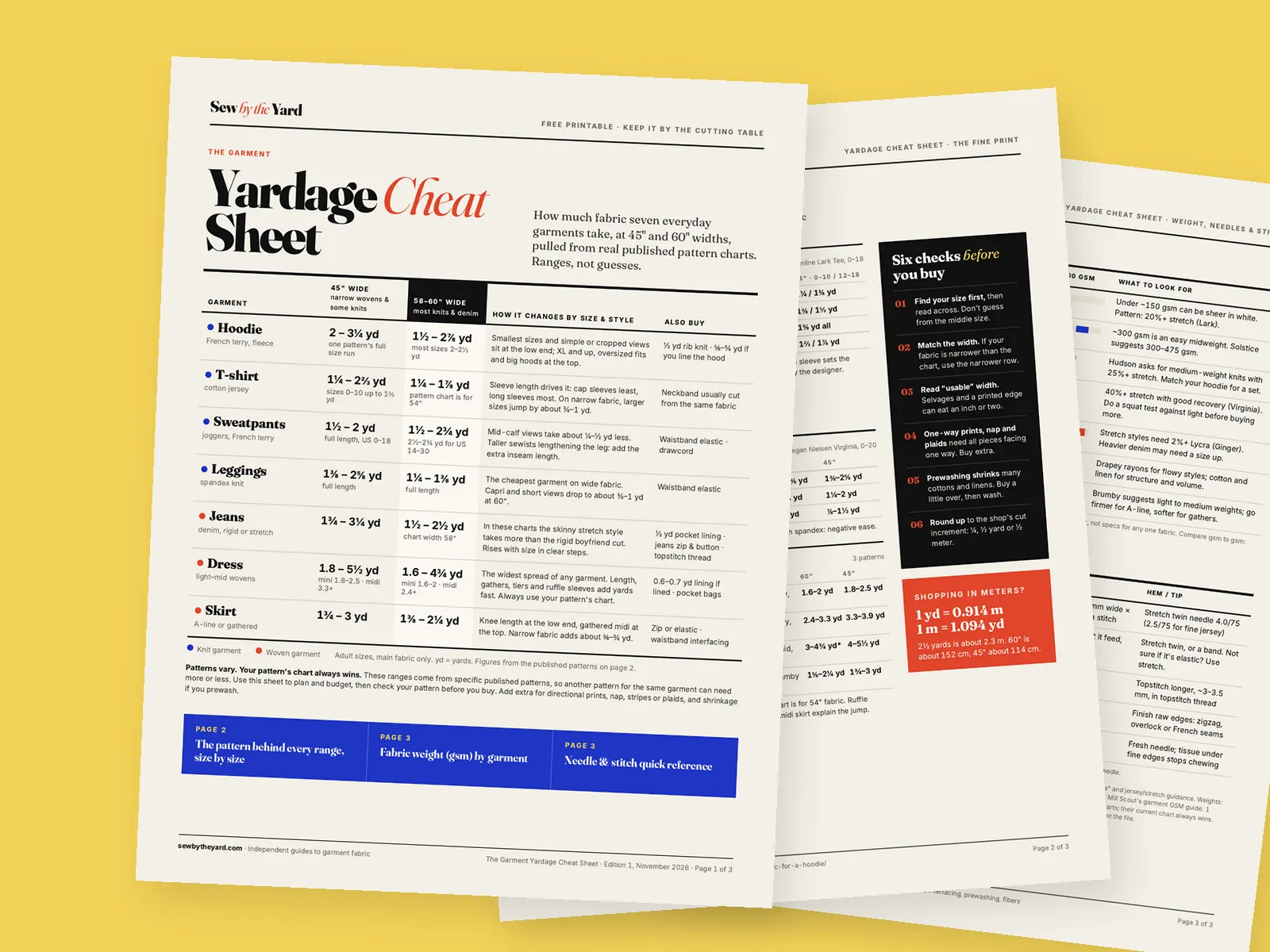
Free printable: keep the needle and thread guide next to your machine so you don’t have to remember any of this.
Common questions
What is the difference between a jersey needle and a stretch needle?
Both have a medium ball point. The stretch needle adds a special scarf and eye shape and a flatter profile so it sits closer to the hook, which prevents skipped stitches in elastic fabrics. Schmetz recommends jersey needles for knits without spandex and stretch needles for knits with spandex.
Is a ballpoint needle the same as a jersey needle?
Usually, yes. “Ballpoint” describes the rounded tip, and jersey needles are medium ballpoint needles; packets also label them SUK. Stretch needles have a ball point too, but with extra design changes for elastic fabric.
Can I sew knits with a universal needle?
Often, on stable knits, with a fresh needle. Universal needles have a slightly rounded point, but they are not designed for knits. If you get skipped stitches or holes, switch to a jersey or stretch needle.
What size needle should I use for jersey?
Start with 75/11 or 80/12 for T-shirt-weight jersey, 70/10 for very fine jersey, and 90/14 for sweatshirt fleece or bulky seams. Test on a scrap; if you see holes, go down a size.
Which needle for leggings and swimwear?
A stretch needle, because those fabrics contain spandex. If you still get skipped stitches, or you’re using thicker thread, try a super stretch needle.
How often should I change my sewing machine needle?
Schmetz recommends about every 8 hours of sewing, or at the start of each new project, and immediately if you hear a popping sound or see skipped stitches.
Sources
- Schmetz: Four needles for jersey (jersey, stretch, super stretch and black super stretch uses; stretch twin; size and test advice)
- Schmetz: Needle ABC (PDF) (point shapes, size system, available sizes, needle change and thread test)
- Organ Needles: Needle Index (PDF) (jersey and super stretch needles, worn needles)
- The Last Stitch: Guide to sewing machine needles for knits (universal vs ballpoint, sizes for knits, inserting the needle)
Free printable · The newsletter
Never guess yardage again.
Join the Sew by the Yard newsletter and get The Garment Yardage Cheat Sheet: fabric amounts for seven garments at 45" and 60", a fabric-weight guide and a needle chart, on three printable pages.