How to Sew a T-Shirt Neckband That Lies Flat
How long to cut a knit neckband, how wide to make it, and how to sew it on so it lies flat: no waves, no puckers, no gaping crew neck.
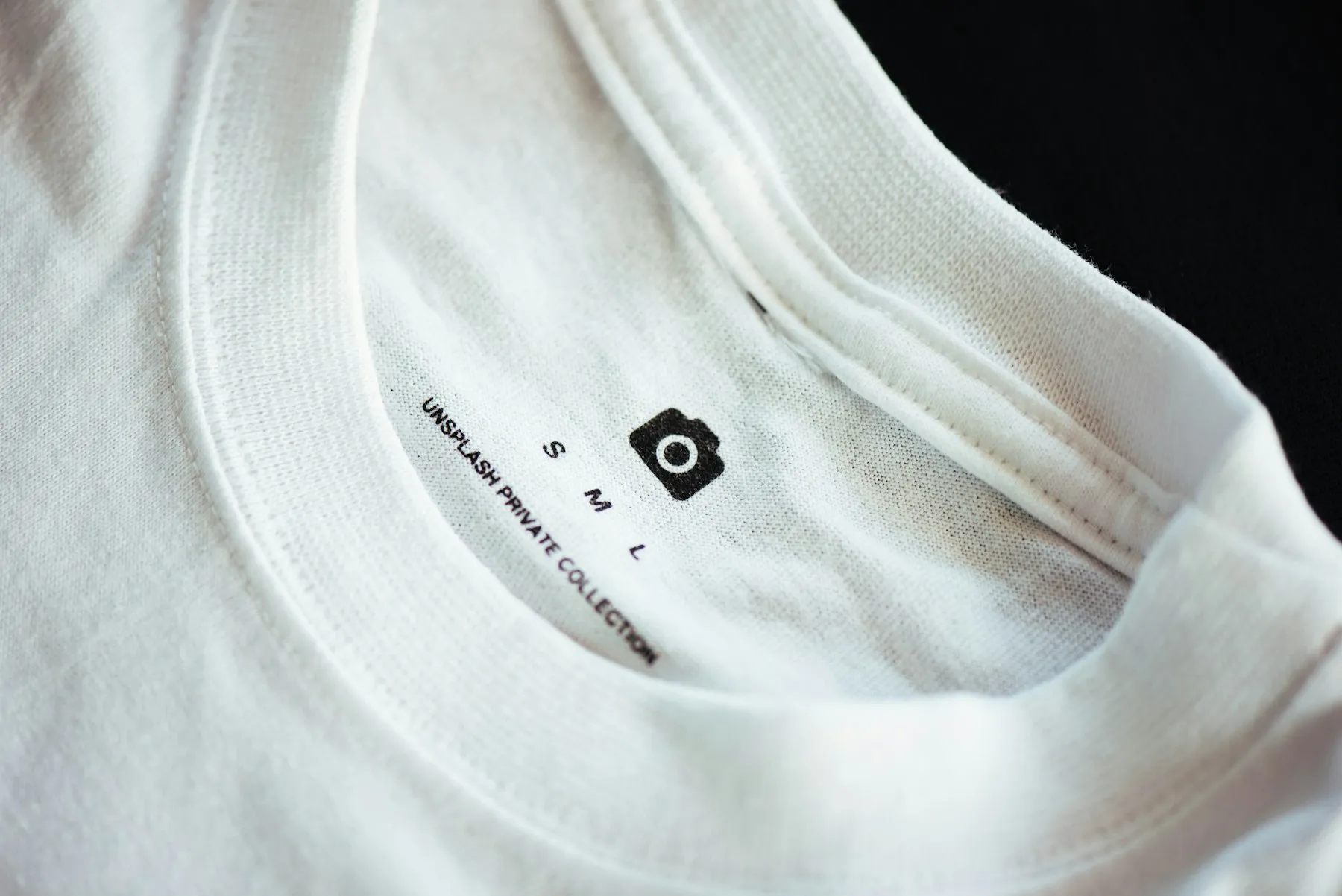
A neckband is the part of a homemade T-shirt that most often gives it away. Too long and it stands up and ripples; too short and it pulls the neckline into puckers. The fix isn’t skill so much as math and a little stretch control. If you’re new to knits, read how to sew knits without a serger first for needles and stretch stitches.
Why does a neckband have to be shorter than the neckline?
The band sits on the inside edge of a curve, so it has to hug the body rather than lie on top of it. Cutting it shorter and stretching it as you sew makes it pull in gently against the neck. As Dart’s neckband calculator puts it, a band that’s too long will stand up and gape, and one that’s too short puckers and feels tight.
How long should a T-shirt neckband be?
Measure the whole neckline along the seamline, not the cut edge. Stand a flexible tape on its edge to follow the curve, front and back. Then multiply by a ratio that depends on how stretchy the band fabric is.
| Band fabric | Band length as % of neckline | Source |
|---|---|---|
| Self-fabric jersey, crew neck | ~85% | Sie Macht, Sonia Estep |
| Most knit bands (general range) | 80–90% | Sie Macht |
| Rib knit | 70–80% | Sie Macht |
| Stable interlock or French terry | ~90% | Ourlette |
Then add two seam allowances for the seam that closes the loop. Sonia Estep’s example: a 10-inch neckline × 85% = 8½ inches, plus ½ inch for two ¼-inch seam allowances.
How wide should a neckband be?
Cut it twice the finished width plus two seam allowances, because it’s folded in half. Sie Macht notes most crew and scoop neckbands finish between 3/8 inch and 1 inch, and that wider bands are more likely to gape. Sonia Estep’s preferred cut height is 1¾ inches. A narrow band suits a fitted tee; a wider one suits a sweatshirt.
Grain matters: cut the band so the fabric’s greatest stretch runs along the band’s length, the same direction as around the body.
How do you sew a neckband on a T-shirt?
Sew the shoulder seams first. Leave the side seams open if you find it easier to work flat.
- Close the loop. Fold the band right sides together and sew the short ends. Finger-press the seam open.
- Fold it in half lengthwise, wrong sides together, raw edges matching. Press lightly without stretching.
- Quarter the band. Put a pin at the seam, one opposite it, and two halfway between.
- Quarter the neckline. Mark center back and center front, then the two points halfway between. Dart and Ourlette both point out that the front neckline dips lower than the back, so these side marks land a little in front of the shoulder seams, not on them.
- Pin band to neckline, right side of the shirt out and raw edges together, matching the four marks. Put the band’s seam at center back.
- Sew with the band on top, using a narrow zigzag, stretch stitch or serger. Stretch the band between pins until it matches the neckline, and keep the shirt body relaxed. Don’t pull the body.
- Press the seam allowance toward the body with steam, lifting the iron rather than sliding it.
- Topstitch (optional) on the body just below the seam to hold the allowance down. A twin needle gives a ready-to-wear double row: see how to hem knits with a twin needle.
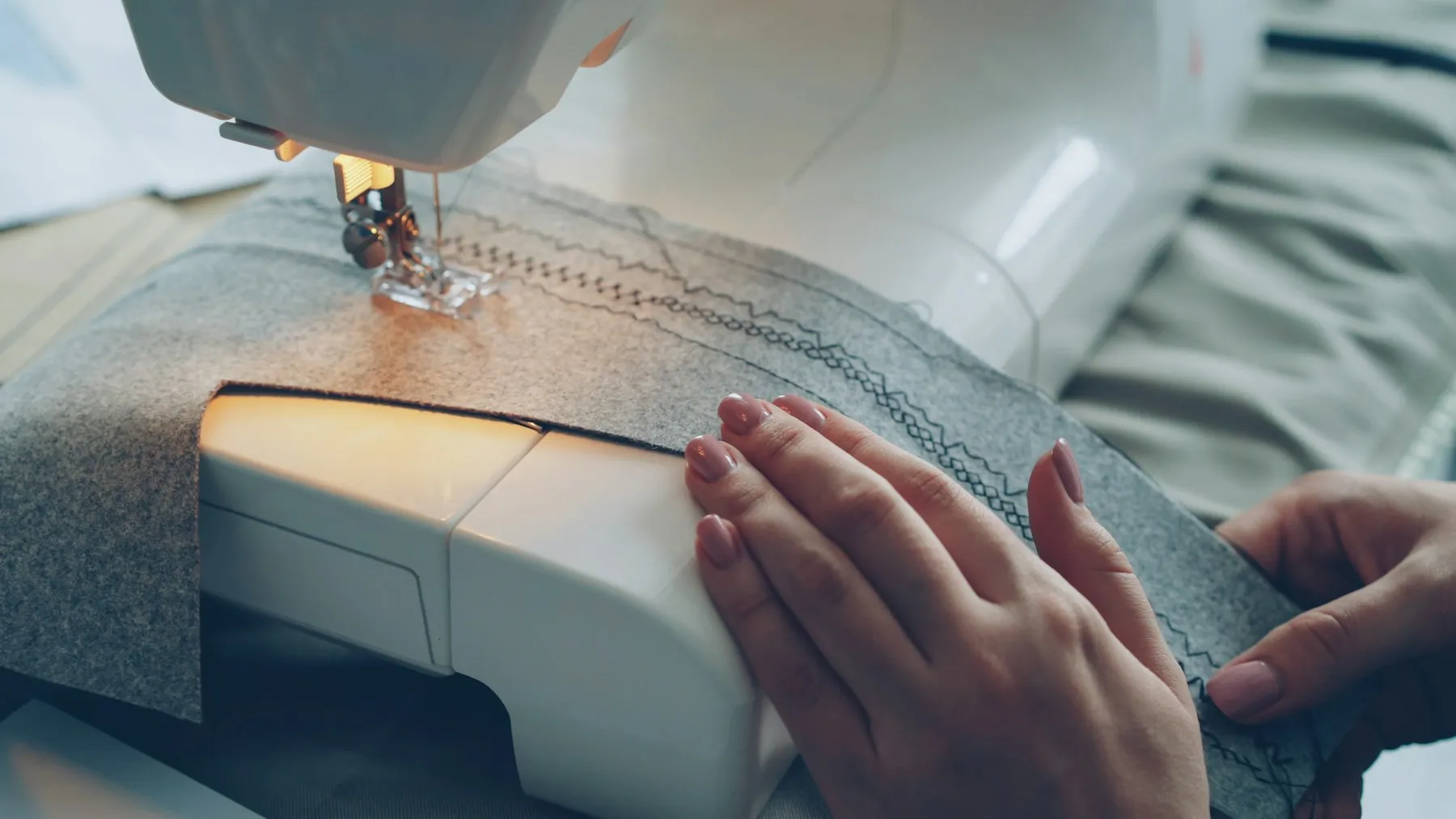
Stretch the band, not the body. The band is shorter on purpose; the shirt should go under the needle flat.
Why is my neckband wavy or puckered?
| Problem | Likely cause | Fix |
|---|---|---|
| Band ripples or stands up | Band too long for the fabric’s stretch | Shorten it a few percent and resew |
| Neckline puckers or pulls in | Band too short, or the body was stretched | Lengthen the band; keep the body flat as you sew |
| Uneven: flat in back, wavy in front | Quarter marks set at the shoulder seams | Move the side marks forward of the shoulders |
| Band twists or rolls | Cut off-grain, or stretched while pressing | Recut with the stretch along the length; press without pulling |
| Lumpy seam at the back | Bulky loop seam | Trim the loop’s seam allowance and press it open |
Rib knit or self-fabric: which should you use?
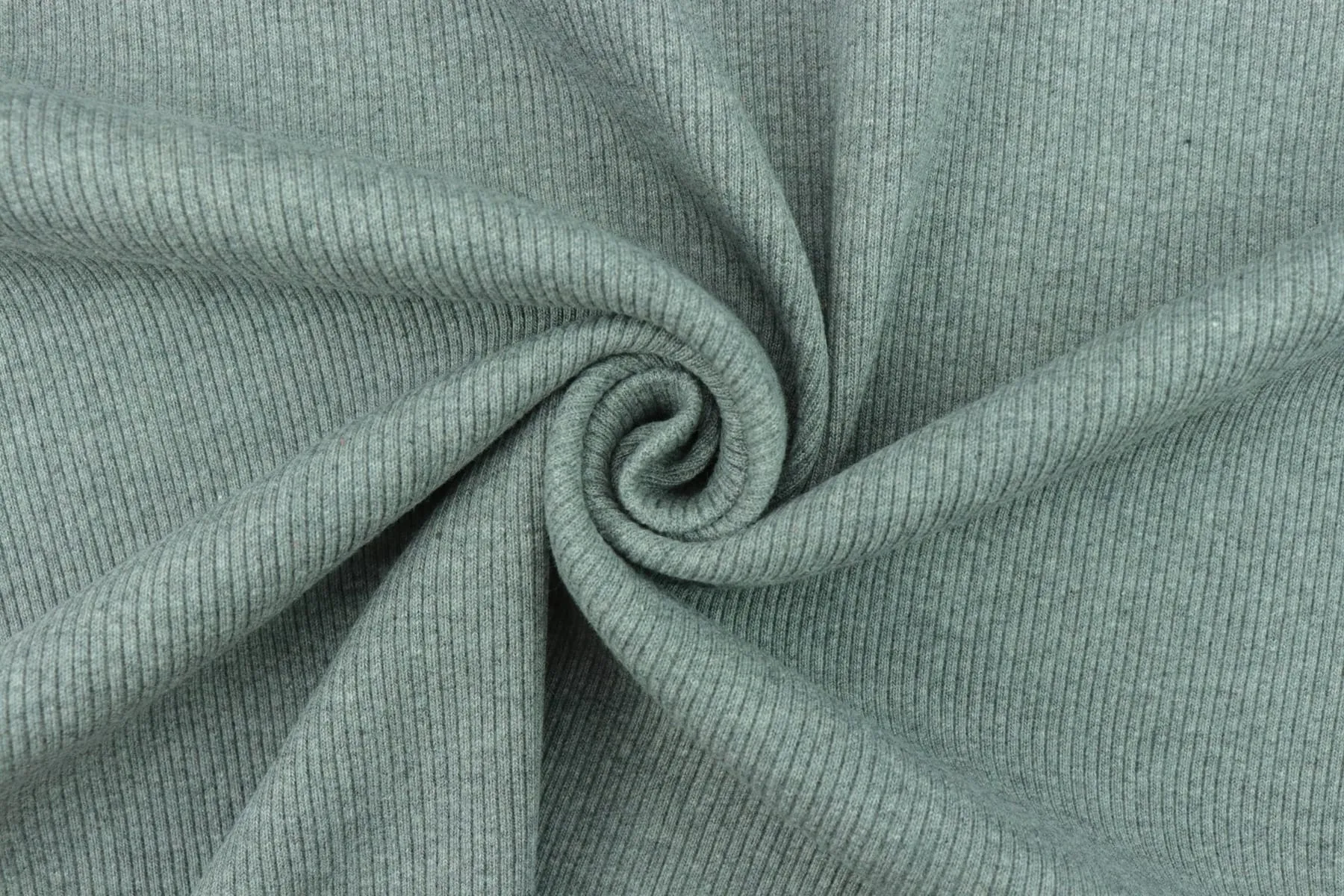
Rib knit stretches more and snaps back better, so it holds a crew neck snugly. That’s why it’s cut shorter. Self-fabric (the same jersey as the shirt) matches perfectly but needs to contain some spandex to recover well. Our guide to the best fabric for T-shirts explains which jerseys recover well enough for a self-fabric band. Our fabric fiber guide explains what spandex does in a blend. The same band method finishes hoodie cuffs and hems too. How to cut and sew hoodie rib cuffs and hem bands walks through the construction, how much ribbing for a hoodie has the cutting chart, and how much fabric for a t-shirt (or our fabric yardage calculator) gives t-shirt yardage by size.
Common questions
What percentage should a neckband be?
Most knit neckbands are cut 80–90% of the neckline seam length, and 85% is a common starting point for jersey. Stretchier rib knit is often cut 70–80%. Add seam allowance for closing the loop, and test the stretch first.
Do you measure the neckline at the cut edge or the seamline?
At the seamline, not including seam allowance. Stand the tape measure on its edge so it follows the curve, and measure the front and back neckline together.
Should the neckband seam go at the back or the shoulder?
Center back is the usual spot, where it’s least visible. Some sewists put it at the left shoulder instead, which is fine as long as you still match the quarter marks.
Do I need a serger to sew a neckband?
No. A narrow zigzag or your machine’s stretch stitch works on a regular sewing machine. Use a ballpoint or stretch needle so the knit doesn’t skip stitches.
Why is my neckband gaping?
Usually the band is too long for how stretchy the fabric is, or it’s too wide. Cut it a little shorter or narrower and test again. Bands wider than about 1 inch finished are more prone to gaping.
Sources
- Sie Macht: How to sew a knit neckband (length ratios, finished widths, rib vs fabric bands)
- Sonia Estep Designs: DIY neckband tutorial (85% formula with worked example, band height)
- Dart: T-shirt neckband length calculator (measuring the seamline, why front quarters differ)
- Ourlette: How to sew a neckband on a T-shirt that lies flat (ratios by fabric, stretch test, troubleshooting)
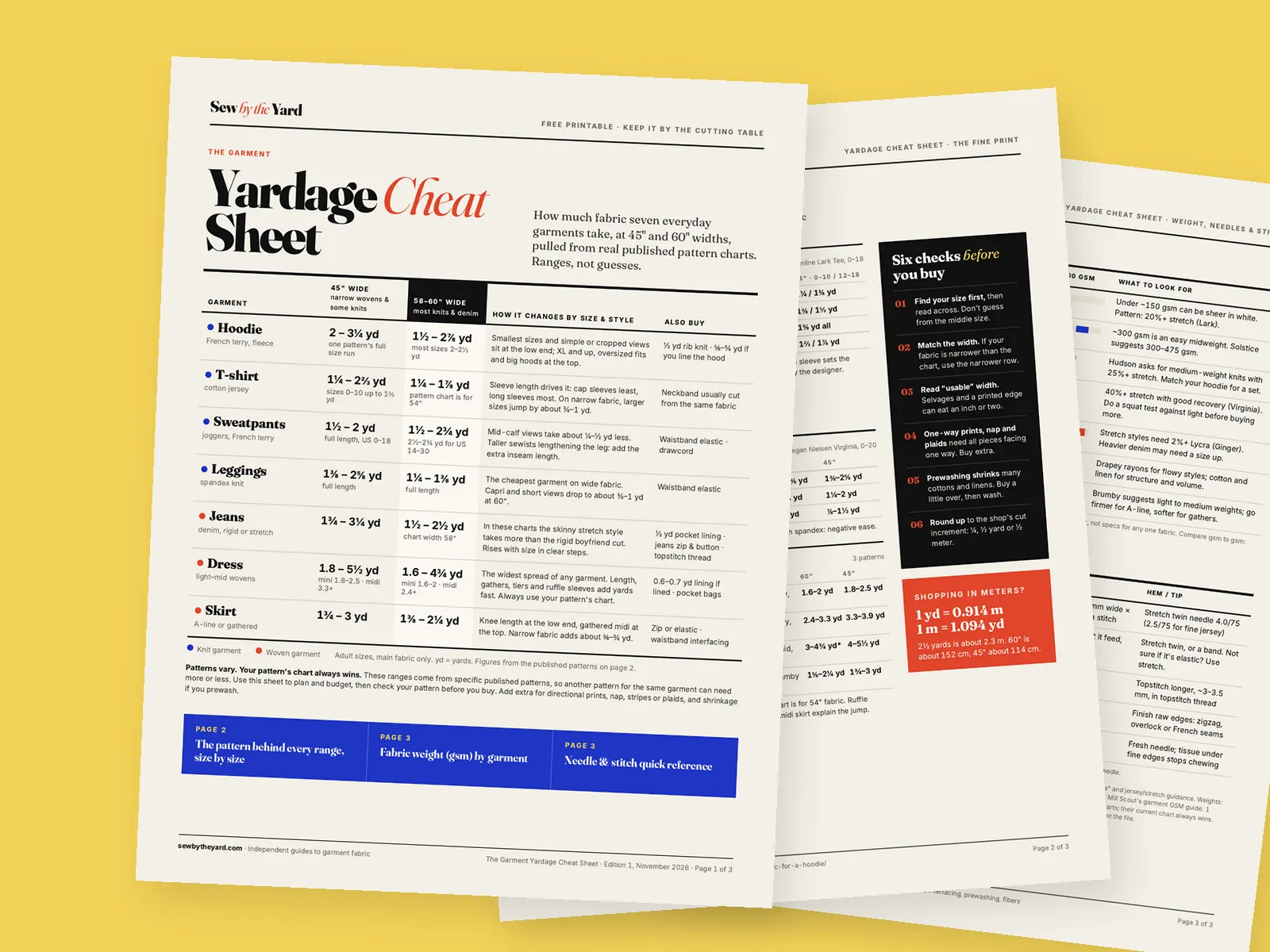
Free printable · The newsletter
Never guess yardage again.
Join the Sew by the Yard newsletter and get The Garment Yardage Cheat Sheet: fabric amounts for seven garments at 45" and 60", a fabric-weight guide and a needle chart, on three printable pages.