How to Hem Knits with a Twin Needle
A step-by-step guide to twin-needle hems on T-shirts and other knits: which needle to buy, how to thread it, the settings to start from, and how to stop tunneling.
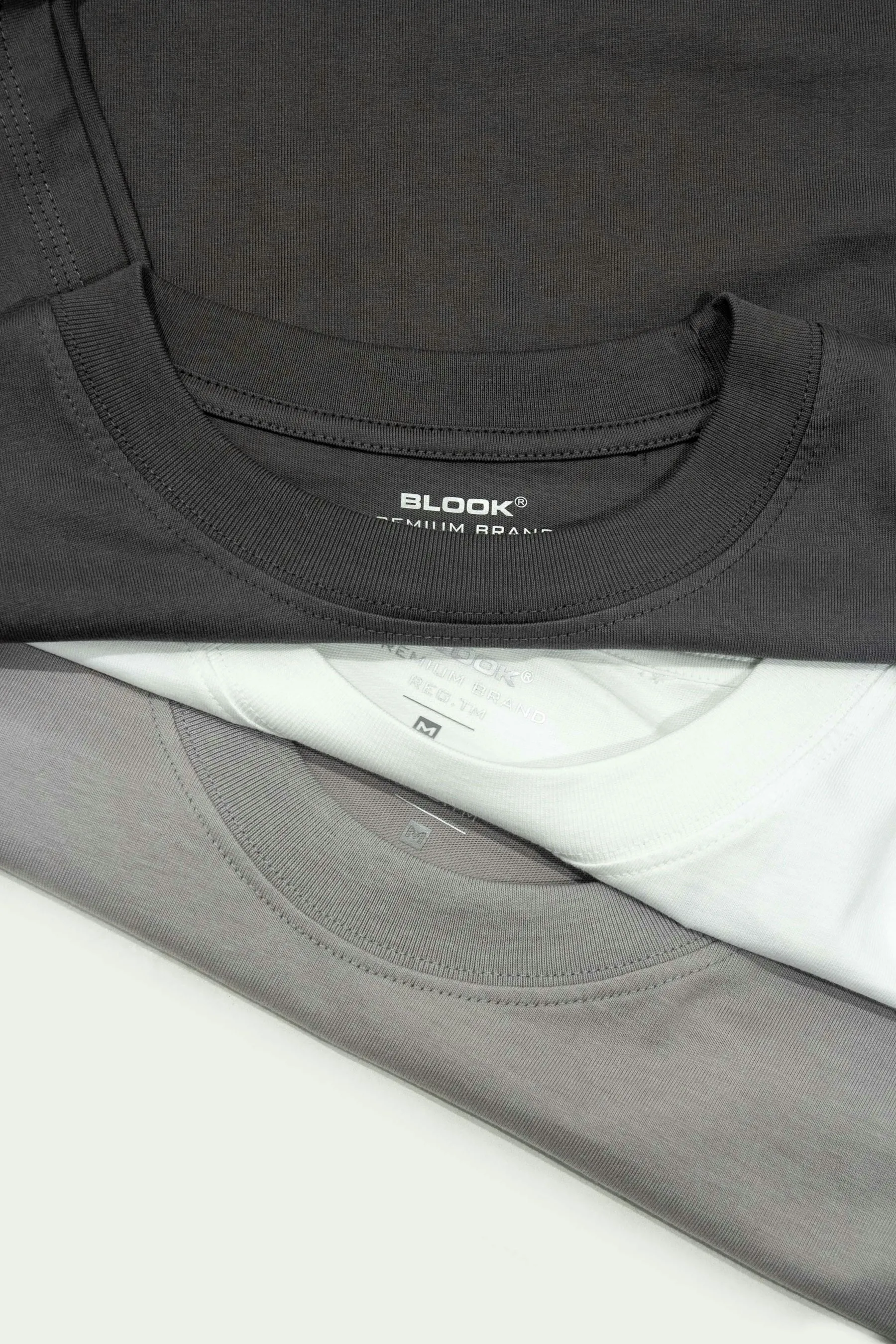
A twin-needle hem looks like the double row of stitching on a store-bought tee. Factories sew that with a coverstitch machine. A twin needle gets you close on a regular sewing machine, and it costs a few dollars. If you haven’t sewn knits before, start with our guide to sewing knits without a serger, which covers needles, stretch stitches and seams. This post picks up where its hemming section leaves off.
Twin-needle hems at a glance
| 2.5 mm stretch twin | 4.0 mm stretch twin | |
|---|---|---|
| Needle | Schmetz Stretch Twin, size 75 | Schmetz Stretch Twin, size 75 |
| Best for | Light jersey | A classic T-shirt hem |
| Stitch | Straight stitch from the right side, hem folded underneath, slightly longer than usual | Same setup |
| Tunneling | Use this spacing if a 4.0 mm test ridges | Wider rows; more likely to tunnel on light knits |
| Machine | Needs a zigzag function and a needle plate and foot with a wide enough opening. A straight-stitch plate will not work. | Same requirement |
Thread one spool for each needle, both unwinding in the same direction. The bobbin stays a single thread. Loosen the upper tension a little and stabilize the hem so it does not tunnel into a ridge.
How do you hem a knit with a twin needle?
Here is the quick version, with the steps in detail below:
- Needle: a stretch twin needle, in 2.5 mm spacing for light jersey or 4.0 mm for the classic tee hem. Both come in size 75 from Schmetz.
- Thread: one spool for each needle, both unwinding in the same direction. The bobbin stays a single thread.
- Stitch: a straight stitch with the needle centered, sewn from the right side with the hem folded underneath, and a slightly longer stitch than usual.
- Stop tunneling: loosen the upper tension a little, stabilize the hem, and try 2.5 mm spacing if a 4.0 mm test ridges.
- Machine: it needs a zigzag function and a needle plate and foot with a wide enough opening. A straight-stitch plate will not work.
What you need
- A stretch twin needle. Schmetz’s Stretch Twin has a medium ball point for knits and comes in 2.5 mm and 4.0 mm spacing, both in size 75. Use a universal or jersey twin only if that’s what your knit calls for; the stretch version is the safer default for anything with spandex. Not sure which single needle your knit needs for the seams? See our needle guide for knits.
- Two spools of thread in the same color, or one spool plus a bobbin wound as a second spool. Polyester all-purpose thread is fine.
- A zigzag presser foot and needle plate. The needles sit side by side, so the foot and plate need an opening wide enough for both.
- Something to stabilize the hem: a strip of lightweight fusible knit interfacing or fusible hem tape, or a water-soluble stabilizer underneath.
- Optional: wash-away double-sided tape or a glue stick for holding the hem, and a walking foot.
1. Read the numbers on the package
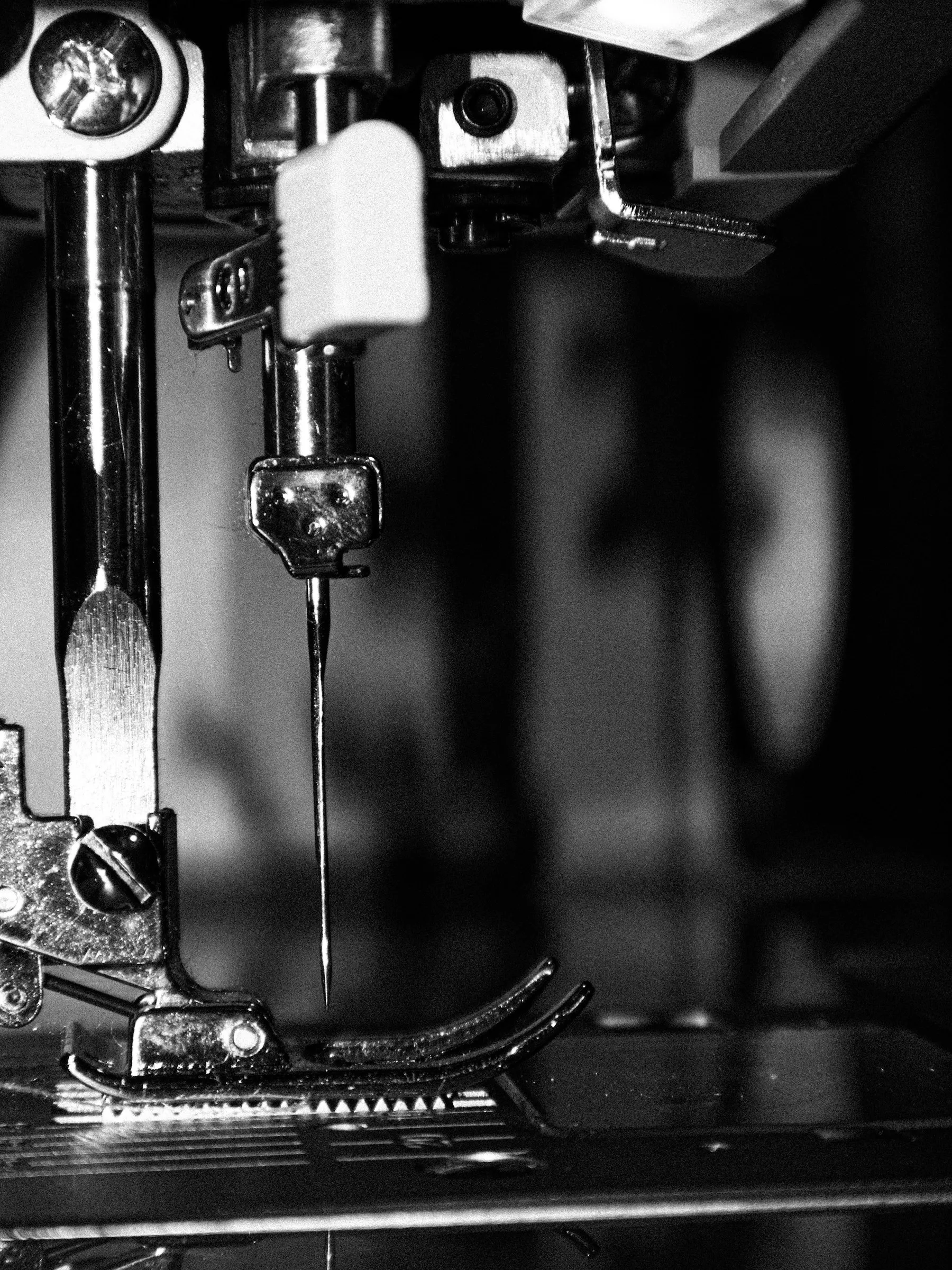
Twin-needle packs carry two numbers, such as 4.0/75. According to Schmetz, the first is the distance between the needles in millimeters and the second is the needle size. Twin needles come in spacings from about 2.0 to 6.0 mm, but for knit hems the two stretch sizes cover most garments:
| Spacing | Looks like | Good for |
|---|---|---|
| 2.5 mm | Narrow, delicate double row | Lightweight jersey, sleeve hems, topstitching a neckband seam |
| 4.0 mm | The classic T-shirt hem | Tee and dress hems, midweight jersey, interlock |
Many sewists find the wider 4.0 mm spacing more likely to tunnel on light, stretchy jersey, so try 2.5 mm if a 4.0 mm test hem ridges.
2. Prepare and stabilize the hem
Most tunneling is decided before you sew. Prepare the hem so the knit can’t stretch as it feeds.
- Finish the garment first. Sew the side seams, then press them.
- Press up the hem allowance your pattern gives. Steam it so the fold holds.
- Stabilize the fold. Fuse a strip of lightweight knit interfacing or fusible hem tape inside the hem allowance. Schmetz also suggests a backing, such as a water-soluble stabilizer, to prevent tunneling on fine jersey. Our interfacing basics guide covers which types stay soft on a knit.
- Hold it in place. Pins work, but they’re easy to stitch over from the right side. Wash-away tape or a few dabs of glue stick keep the hem flat without pins.
- Mark a stitching line on the right side with chalk or a wash-away pen. Place it so both rows will catch the raw edge of the hem allowance underneath.
3. Thread the twin needle
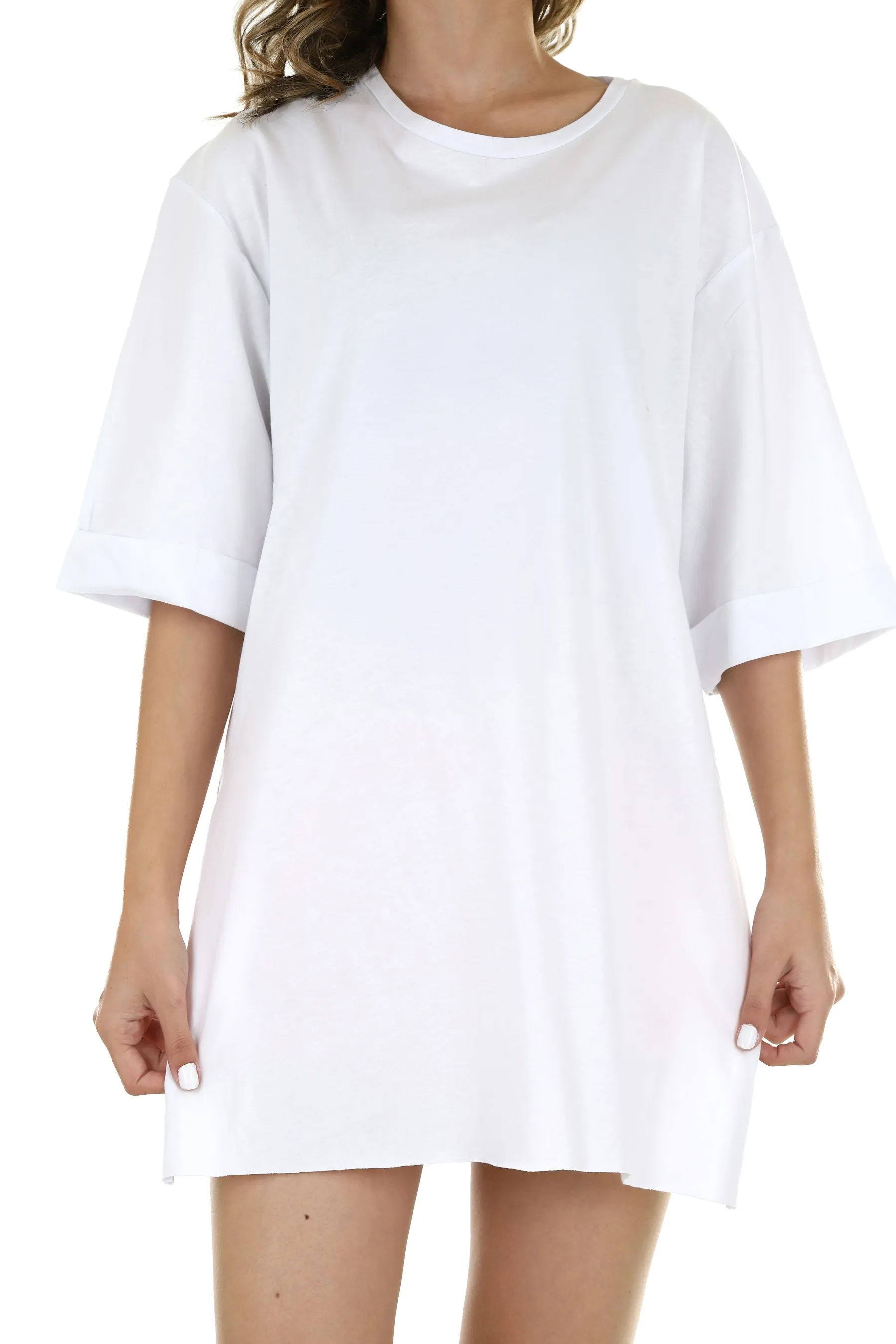
Threading is where most twin-needle trouble starts. Schmetz’s twin and triple needle guide gives these steps:
- Insert the needle with the flat side of the shank facing the back, as with a single needle.
- Use a separate spool for each needle. Put both on the machine so they unwind in the same direction, otherwise the threads twist together.
- Thread both together through the machine’s thread path, as if they were one thread.
- Separate them just above the needle and thread one through each eye. Your automatic needle threader won’t work with a twin needle, so thread the eyes by hand.
- The bobbin stays as it is. One bobbin thread serves both needles, zigzagging between the two rows underneath.
Some machine manuals tell you to run one thread on each side of a tension disc, which also helps stop twisting. Check yours.
4. Set the machine
These are starting points. Test on a folded scrap of the same fabric before you sew the garment.
| Setting | Start here | Why |
|---|---|---|
| Stitch | Straight stitch, center needle position | Any swing can hit the foot or plate |
| Stitch length | A little longer than usual, around 3 mm | Longer stitches pull the rows together less |
| Upper tension | Slightly looser than normal | Schmetz notes the tension usually needs loosening to avoid a ridge |
| Presser-foot pressure | Lighter, if your machine allows it | Helps stop the top layer stretching |
| Twin-needle mode | On, if you have it | Limits the stitch width for you |
Turn the hand wheel through a full stitch before you press the pedal, to check that both needles clear the plate.
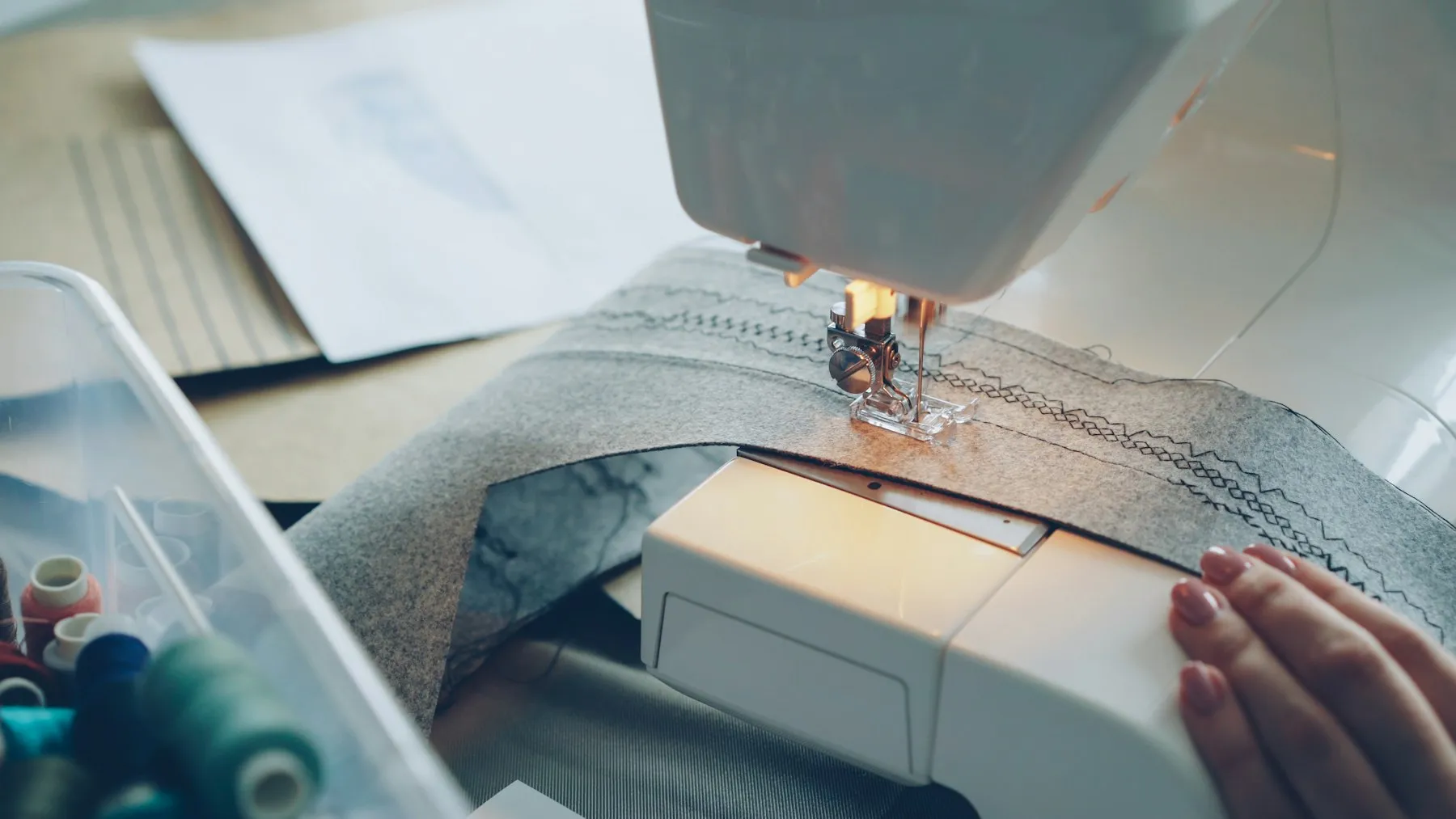
5. Sew from the right side
You sew a twin-needle hem with the right side up, so the hem allowance is underneath and out of sight.
- Start at a side seam, not in the middle of the front.
- Line up your mark with a point on the presser foot or a seam guide on the needle plate, and watch that point, not the needles.
- Sew slowly and let the feed dogs move the fabric. Don’t pull it from behind or push it in front. On a tube like a T-shirt hem, sew all the way around and overlap the first few stitches.
- Don’t backstitch. Reversing with a twin needle tends to tangle. Instead, leave long thread tails, pull the two top threads through to the wrong side, and knot them with the bobbin thread.
- Trim the excess hem allowance above the stitching if any shows, using small scissors so you don’t nick the garment.
Watch your stitching mark, not the needles. A straight hem comes from a steady guide, not from steering at the needle.
6. Press it
Steam the finished hem from the right side, hovering the iron or pressing lightly. A slight ridge often flattens once the knit relaxes. If you used water-soluble stabilizer or wash-away tape, rinse it out following the product’s instructions and let the garment dry flat.
How stretchy is a twin-needle hem?
A twin-needle hem stretches, but not as much as a coverstitch. Underneath, a single bobbin thread zigzags between the two rows, and that zigzag is what gives. Pull a hem hard and the top threads can snap.
That’s fine for most tee, dress and sleeve hems, which barely stretch in wear. For places that need to stretch a lot, like a fitted cuff or the hem of leggings, use a narrow zigzag hem or finish the edge with a rib band instead. Our knit hem finishes compared guide puts the twin needle side by side with zigzag, coverstitch, bands and blind hems. Some sewists hand-wind textured (woolly) nylon thread onto the bobbin for a softer, stretchier underside. If you try it, test the tension on a scrap first.
Free printable: our one-page needle and thread guide puts twin-needle sizes, stretch needles and stitch settings on one sheet.
Troubleshooting
| Problem | Likely cause | Fix |
|---|---|---|
| Ridge between the rows (tunneling) | Upper tension too tight, or the knit is light and stretchy | Loosen the upper tension, lengthen the stitch, stabilize the hem, try 2.5 mm spacing |
| Skipped stitches | Wrong or worn needle, or the fabric lifts with the needle | A new stretch twin needle, plus a stabilizer underneath on fine jersey |
| Top threads snap when the hem is stretched | Too little give in the stitch | Lengthen the stitch, loosen the upper tension slightly, or use a zigzag hem or rib band where it must stretch |
| Wavy, flared hem | The knit stretched as it fed | Lighter presser-foot pressure, a walking foot, a fused hem, slower sewing; more in why knit seams go wavy |
| Threads twist and break | Spools unwinding in opposite directions | Turn one spool so both unwind the same way, then rethread |
| Needle breaks | Needle hit the foot or plate | Use a zigzag plate and foot, center needle position, twin-needle mode |
| Rows miss the raw edge underneath | Stitching line too close to the fold | Mark the line further from the fold, or trim the hem allowance narrower |
What else can you do with a twin needle?
The same setup works for topstitching a neckband seam (see how to sew a T-shirt neckband), so the seam allowance lies flat against the shirt, and for decorative double rows on pockets and plackets. On wovens, a universal twin needle sews two parallel rows of topstitching that look like jeans or workwear.
If you’re picking fabric for a first T-shirt, check how much fabric a T-shirt takes first. Our fabric fiber guide explains how cotton, rayon and spandex blends behave, and should you prewash fabric? covers washing knits before you cut, so the hem doesn’t shrink up after the first wash. Sewing a hoodie instead? It’s usually finished with rib bands, not a hem, so start with the best fabric for hoodies.
Common questions
Can any sewing machine use a twin needle?
Most can. Schmetz says the machine needs a zigzag function, and the needle plate and presser foot need an opening wide enough for the needle spacing. A straight-stitch-only machine, or a machine fitted with a straight-stitch plate, can’t use one.
What size twin needle is best for T-shirt hems?
A stretch twin needle in 4.0 mm spacing gives the classic T-shirt hem. Use 2.5 mm for lightweight jersey, sleeve hems and fine topstitching. Both of Schmetz’s stretch twin sizes are size 75.
Why is my twin needle hem tunneling?
The bobbin thread is pulling the two rows together and lifting the fabric between them. Loosen the upper tension slightly, lengthen the stitch, and stabilize the hem with fusible knit interfacing, hem tape or a water-soluble stabilizer. A narrower 2.5 mm needle also tunnels less on light jersey.
Do you sew a twin needle hem from the right side or wrong side?
From the right side. The two parallel rows show on the outside, and the bobbin zigzag sits on the inside over the hem allowance. Mark a stitching line on the right side so both rows catch the raw edge underneath.
Can you backstitch with a twin needle?
It’s best not to, because reversing tends to tangle the threads. Leave long tails, pull the top threads to the wrong side and tie them off with the bobbin thread. On a hem sewn in the round, overlap the first few stitches instead.
Sources
- Schmetz: Stretch Twin needle (sizes, point type)
- Schmetz: Twin and triple needles (machine requirements, threading, tension)
- Schmetz: Four needles for jersey (stabilizing to prevent tunneling)
- Schmetz USA: How to pick the correct sewing machine needle (reading twin-needle sizes)
Free printable · The newsletter
Never guess yardage again.
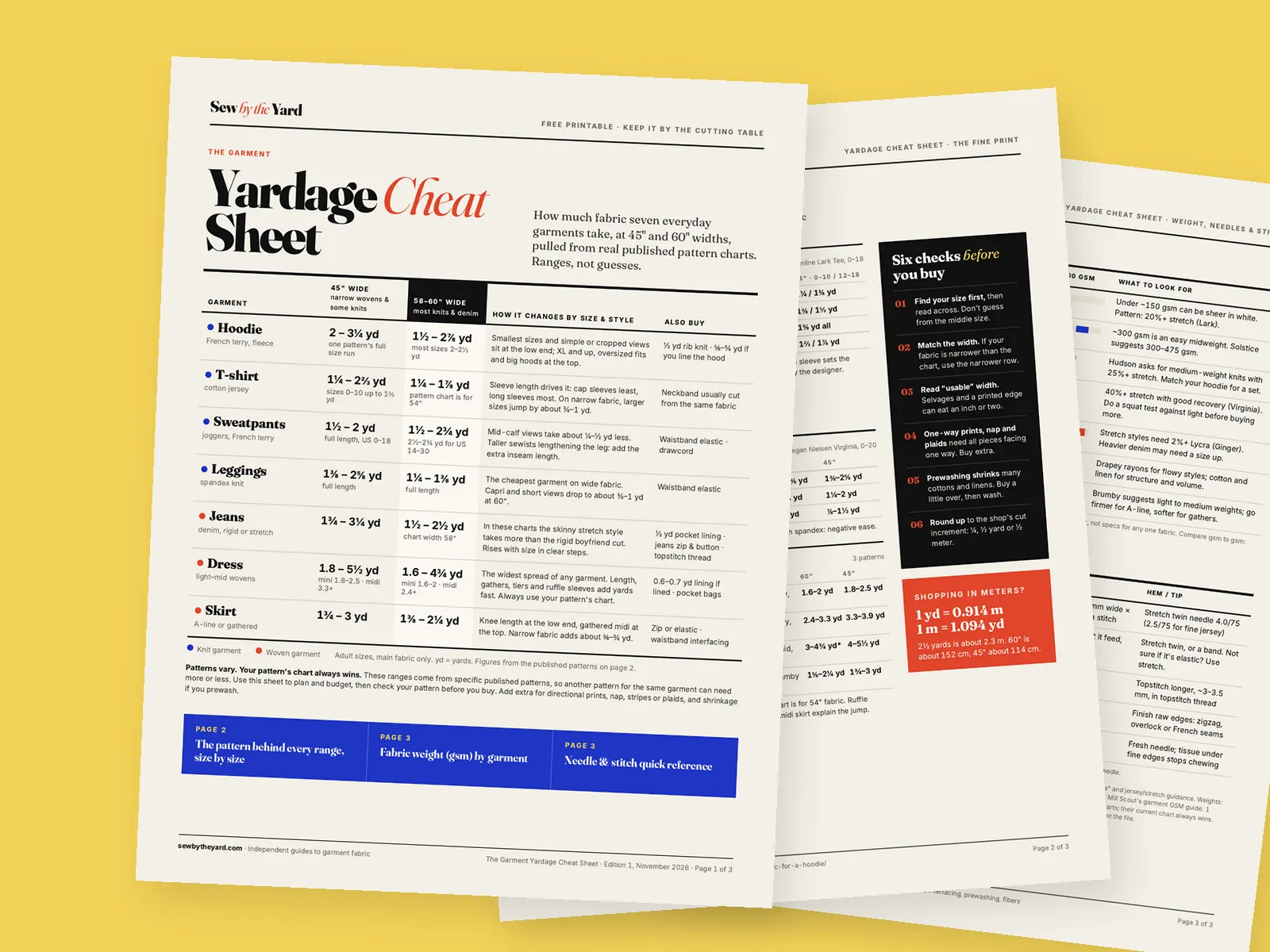
Join the Sew by the Yard newsletter and get The Garment Yardage Cheat Sheet: fabric amounts for seven garments at 45" and 60", a fabric-weight guide and a needle chart, on three printable pages.